
Court narrows TCPA on texts: sharpen your SMS consent now
What to do about it
- Refresh SMS consent with clear checkboxes, frequency disclosure and STOP language.
- Separate transactional reminders from promo texting and cap promos at 1 to 2 per month.
- Suppress STOP immediately and log consent, opt-outs and message content for at least 4 years.
- Use segmented lists for rebooking nudges, last-minute openings and promos with clear opt-ins.
- Send during business hours only and track opt-out rate under 1 percent per campaign.
Texts get a narrower TCPA reading, but do not get sloppy
The National Law Review reports that a federal court in the Northern District of Alabama concluded texts are not calls under the TCPA and that Do Not Call protections tied to that statute continue to weaken for texting. That may lower federal risk for some SMS marketing. It does not erase carrier rules, CTIA expectations, your state mini TCPA laws or your reputation with clients. Treat this as a chance to tighten consent and expand texting carefully, not a green light to blast.
What to change in your SMS policy this week
Split your messaging into two buckets and get explicit client permission for each:
- Transactional messages: appointment confirmations, reminders, arrival texts, pick-up ready, receipts, vaccine expiry prompts.
- Promotional messages: rebooking nudges without a booked appointment, last-minute openings, seasonal offers, new service announcements, referral incentives.
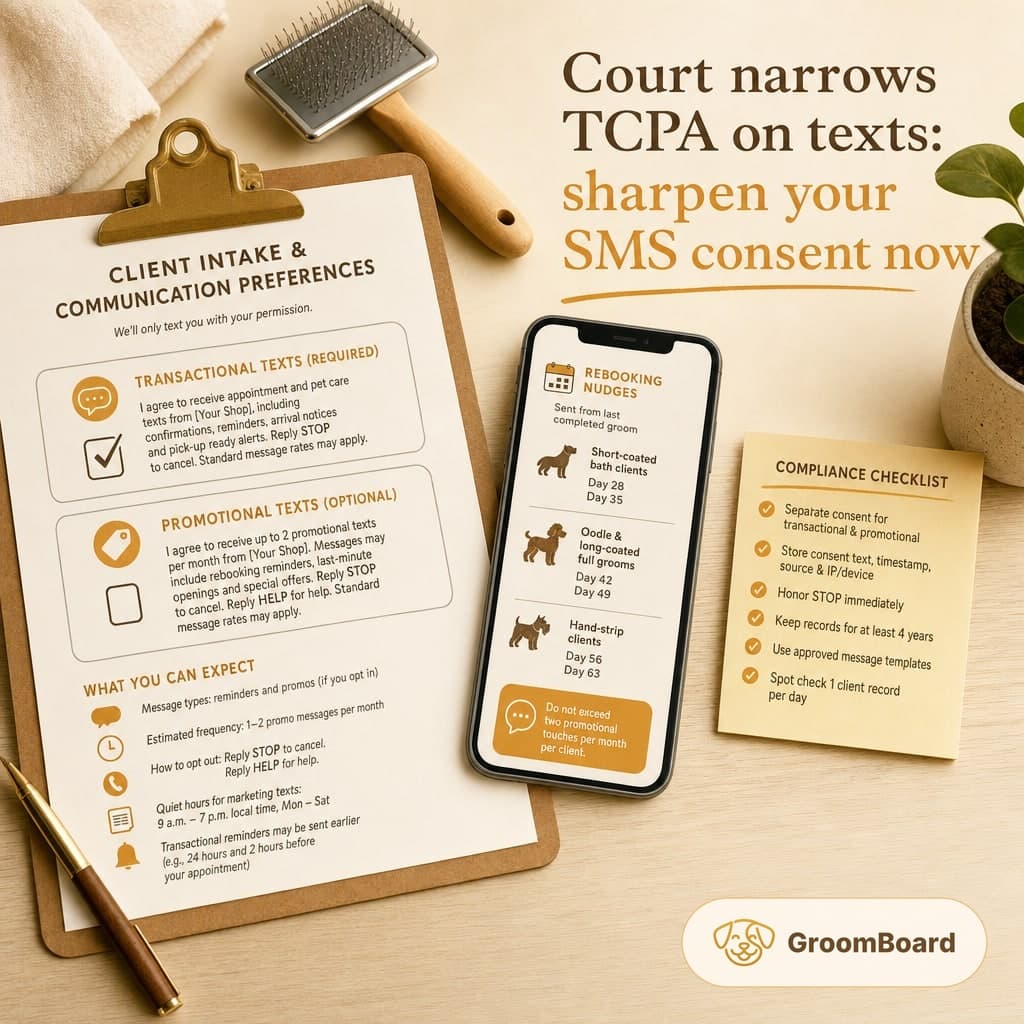
Our guidance: use a separate, unticked-by-default checkbox for promos on your intake form, and a required checkbox for transactional texts. Store the exact consent text, timestamp, source and IP or device if online.
Add clear disclosures next to the checkbox:
- Message types you will send, for example reminders and promos if they opt in.
- Estimated frequency, for example 1 to 2 promo messages per month.
- How to opt out, for example Reply STOP to cancel. Reply HELP for help.
- That standard message rates may apply.
Quiet hours: send marketing texts only between 9 a.m. and 7 p.m. local time, Monday to Saturday. Transactional reminders can go earlier, but keep them polite, for example 24 hours and 2 hours before the appointment.
List building and segmentation that respects consent
Build distinct lists so you always send the right content to the right clients:
- Reminders list: everyone who checked transactional texts. No promos to this list.
- Rebooking nudges list: clients who opted into promos and are due back based on breed and coat schedule.
- Openings list: clients who opted into promos and also opted into short-notice texts.
- Seasonal promos list: all promo opt-ins who have visited in the past 12 months.
Recommended rebooking cadence by coat type, count from the last completed groom:
- Short-coated bath clients: send at day 28 and day 35.
- Oodle and long-coated full grooms: send at day 42 and day 49.
- Hand-strip clients: send at day 56 and day 63.
Do not exceed two promotional touches per month per client. If you run a special plus an openings alert in the same week, skip the next promo for anyone who received both.
Compliance hygiene: STOP handling and recordkeeping
STOP means stop. Suppress that number from promos immediately and from transactional messages if they request that too. Our standard is to process opt-outs in real time and confirm with a single final message that they are unsubscribed. If your tool does not auto suppress on STOP, change tools.
Keep an audit trail for every contact for at least 4 years:
- Consent logs: what version of your consent text they agreed to, how, and when.
- Message logs: date, time, content, list name, and whether it was transactional or promotional.
- Opt-out logs: date and method, for example STOP keyword or manual request.
If you use templates, lock them. Only designated staff can edit copy. Version stamp every change. Spot check one client record per day for consent and messaging accuracy.
Copy you can use today
Consent text, intake form next to the promo checkbox:
I agree to receive up to 2 promotional texts per month from [Your Shop]. Messages may include rebooking reminders, last-minute openings and special offers. Reply STOP to cancel. Reply HELP for help. Standard message rates may apply.
Consent text, intake form next to the transactional checkbox:
I agree to receive appointment and pet care texts from [Your Shop], including confirmations, reminders, arrival notices and pick-up ready alerts. Reply STOP to cancel. Standard message rates may apply.
Rebooking nudges, due at 6 to 8 weeks:
[Pet Name] is due for a tidy up. Reply 1 for next week, 2 for the week after, or tap to book: [short link].
Last-minute opening, VIP openings list only:
One spot tomorrow at 2:30 for small to medium dogs. First to prepay holds it. Book here: [short link].
Seasonal promo:
Fall de-shed package, save 10 dollars this week. Limited spots. Reply BOOK for a link.
Operational guardrails that protect your list and bookings
- Payment to hold: for last-minute openings, require 50 to 100 percent prepayment by link. No refunds on no-shows.
- Frequency caps: enforce at the contact level so a client never receives more than 2 promos in any 30 day window.
- Reply handling: if a client replies with anything other than a keyword, respond within 1 business day. Convert hot replies to booked slots before lunch.
- Metrics: monitor delivery rate, click rate and opt-out rate. Pause any campaign with an opt-out rate above 1 percent and fix the copy or the audience.
- Staff training: give your team a 2 page SMS policy. Include when they can text from a shop phone, approved templates and how to log consent.
If your software supports it, use online booking and deposits in the same workflow so texts convert without phone tag. GroomBoard, for example, offers SMS reminders, online booking and deposits via Stripe, which keeps the flow simple from text to paid appointment.
Final note on risk
The reported decision narrows TCPA exposure for some texting, but it is one federal court and not universal. Your state may treat texts differently, and carriers can still filter or block messages that ignore opt-in norms. If you follow clear consent, honest disclosures, respectful hours, easy opt outs and conservative frequency, you will reach more clients and invite fewer headaches.