
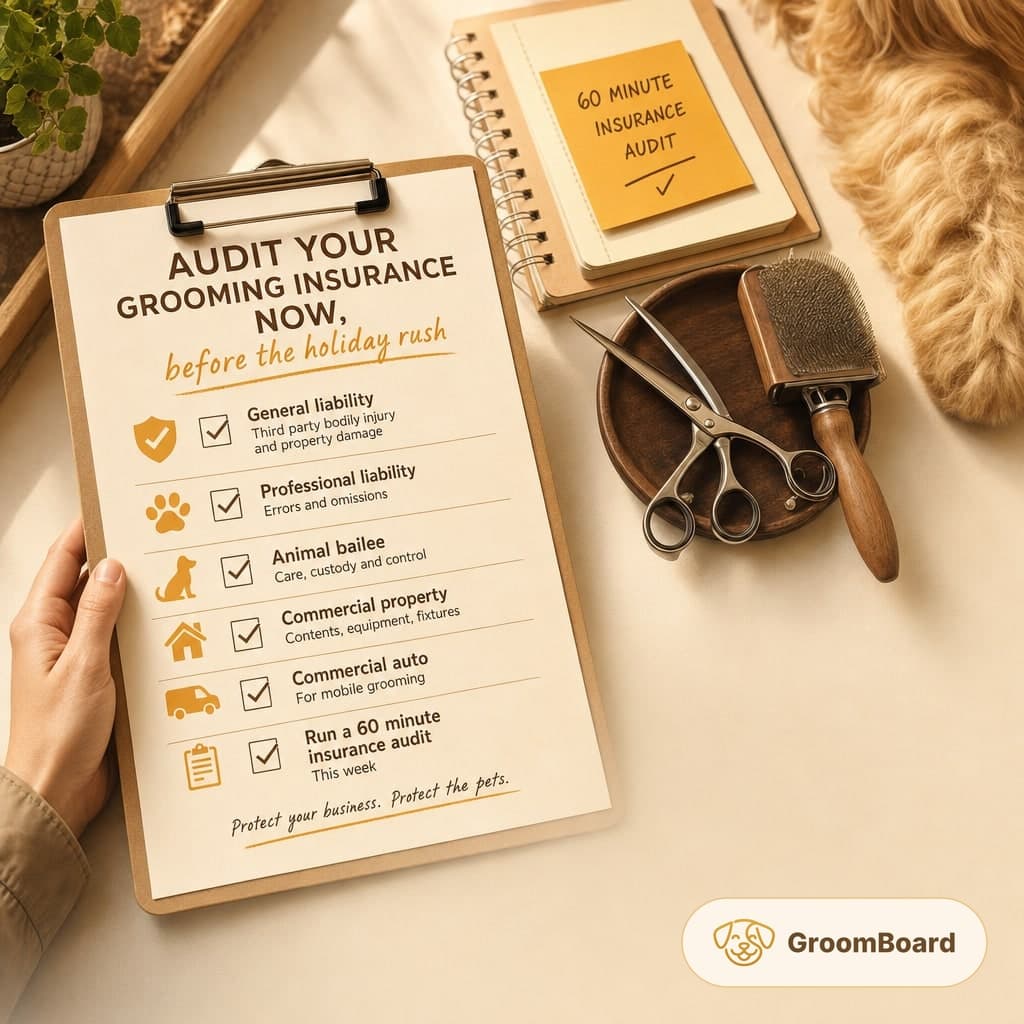
Audit your grooming insurance now, before the holiday rush
What to do about it
- Confirm you carry animal bailee, professional liability, and commercial auto if you are mobile.
- Complete a 60 minute insurance audit and raise limits or add endorsements where you see gaps.
- Document safety protocols and staff training to ask your broker about premium credits.
- Add 1 to 3 dollars per pet or update base prices to cover higher premiums.
- Use clear consent forms for matted, senior, or aggressive pets and keep incident logs ready for claims.
The news and why it matters
Wealth Professional reports that a survey found one in four small firms operate without business insurance. If a grooming business falls into that group, a single incident can be fatal to the company. Even insured salons and mobiles often discover costly gaps when something goes wrong. Treat this as your reminder to check coverage and pricing before the holidays push volume higher.
The coverage a grooming business should carry
- General liability: Third party bodily injury and property damage, for example a client slip and fall. Our guidance: aim for at least 1 million per occurrence and 2 million aggregate.
- Professional liability: Also called errors and omissions. Covers claims of negligence tied to grooming services, for example a clipper burn that requires veterinary care.
- Animal bailee, care custody and control: Covers injury, illness, death, or escape of an animal in your care. Our guidance: set a per animal limit that would realistically cover emergency surgery and hospitalization. Many groomers target 25,000 to 50,000 per animal and 100,000 or more per occurrence.
- Commercial property: Contents, fixtures, dryers, tubs, tools, and tenant improvements. Consider equipment breakdown coverage for dryers and electrical issues if available.
- Business interruption: Replaces lost income and ongoing expenses if a covered property loss shuts you down. Verify the waiting period and the number of days or months covered.
- Commercial auto for mobiles: Required for business titled vans in many places. Confirm coverage for permanently installed grooming equipment. If staff drive personal cars for errands, ask about hired and non owned auto.
- Inland marine or equipment floater: Covers tools and equipment that move between locations or are stored in a van.
- Workers compensation: If you have employees, many jurisdictions require it. Even when not required, it protects the business and the worker. Ask your broker about your exact obligations.
- Cyber and data breach: Covers costs related to a data incident. Useful if you store client records or take online payments.
- Bonding: Consider if you offer in home or house call services to boost client confidence and some referral partnerships.
Run a 60 minute insurance audit this week
- Collect documents: Declarations pages, endorsements, certificates, and your lease requirements if you rent.
- Check names and operations: The named insured must match your legal entity and any DBA. Confirm your described operations include mobile grooming if applicable, bathing, de shedding, cat grooming if offered, and retail if you sell any add ons.
- Confirm limits and sublimits: General liability, professional liability, and animal bailee. Look for low sublimits that quietly cap animal coverage.
- Review deductibles and cash reserves: Set deductibles you can pay without stress. If your emergency reserve is thin, keep deductibles modest.
- Property and equipment inventory: List dryers, tables, clippers, shears, computers, and van build outs with replacement values. Photos help at claim time.
- Vehicles: Verify VINs, garaging address, any personal use, and declared equipment in the van. Consider rental reimbursement and roadside assistance.
- Payroll and groom count: Brokers often price on revenue and payroll. Update figures so you are not underreported or overpaying.
- Landlord and partners: If a landlord or building asks to be additional insured, get fresh certificates now. Check any minimum limit requirements in your lease.
- Claims and incident plan: Write a one page SOP: stabilize the pet, notify the owner, seek veterinary care if needed, document with photos and times, store invoices, and notify the carrier promptly if it may become a claim.
- Broker call: Book a 15 minute call. Ask about gaps, available endorsements, and any discounts for training or safety measures you already have.
Reduce premiums with better protocols
- Training and logs: Keep documented training on handling seniors, matted coats, aggressive behavior, and dryer safety. Maintain sanitation and blade maintenance logs.
- Facility safety: Post a written kennel check routine, use two point leash control at all times, and require latch checks when moving dogs. Have extinguishers serviced yearly and smoke detectors tested monthly. Keep clear exit paths.
- Mobile specific: Install a backup camera, require parked wheel chocks on grades, and hard mount propane tanks if used. Photograph the van interior quarterly to show secure installations.
- Client paperwork: Use consent forms for matted shave downs, seniors, and medically fragile pets. Include veterinary treatment authorization with a spending cap the owner selects and an emergency contact. State that muzzles or restraints may be used for safety. No waiver removes a duty of care, but clear expectations reduce disputes.
- Cyber basics: Turn on two factor authentication on email, scheduling, and payment accounts. Use unique passwords and lock screens on any device that stores client data.
- Documentation: Store vaccination records, consent forms, photos, and incident logs where you can retrieve them during a claim. Tools like GroomBoard keep client and pet records with vaccination expiry reminders.
Price your services to absorb premiums
Insurance is a cost of doing business. Build it into your menu before the holiday rush so the change does not land mid season.
- Use a simple formula: Annual premium increase divided by annual grooms equals the per pet add on. For example, a 1,200 dollar annual increase across 1,600 grooms is 0.75 per pet. Round to 1 dollar.
- Menu update: Either add 1 to 3 dollars per pet as a shop fee, or roll it into base prices for each weight tier or haircut type. Update your posted menu and reminders.
- Segment by risk: Mobile stops and large or aggressive dogs consume more risk and time. Add a mobile service fee or adjust big dog tiers by 2 to 5 dollars.
- Deposits for cash flow: Take a 25 to 50 percent deposit on new clients and high demand slots. This stabilizes cash during renewal months and reduces no shows.
- Communicate briefly: One sentence is enough in your confirmation: Prices reflect rising costs of insurance, supplies, and labor this season. Thank you for understanding.
If you discover a coverage gap, fix it now, then turn to prevention. A well documented shop with trained staff and clean paperwork is less likely to have a claim and is better positioned if one happens. That combination keeps you grooming through the busy season with fewer surprises.