
Tariffs threaten cross‑border costs, tighten your pricing now
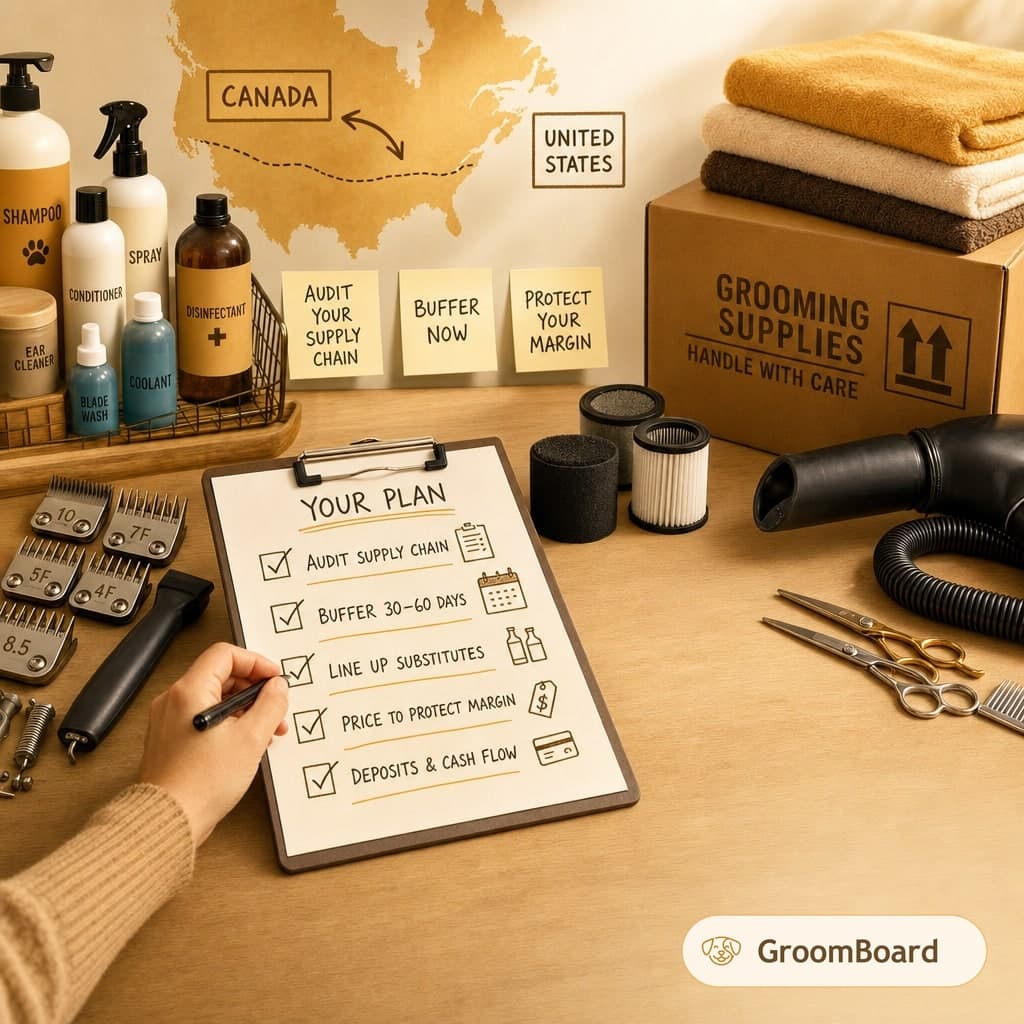
What to do about it
- Identify every product’s country of origin and flag U.S., Canada exposure.
- Order 30 to 60 days of critical consumables and one spare of mission‑critical tools.
- Preload domestic substitute SKUs and update service and retail pricing now.
- Set a 20 to 40 percent booking deposit and tighten cancellation terms.
- Get written lead times and surcharge policies from distributors this week.
What happened and why groomers should care
The Independent reports that Canada’s Prime Minister described the country as at war on trade with the United States and announced retaliatory measures in response to 50 percent U.S. tariffs referenced in the headline. If you buy U.S. brands in Canada or Canadian goods in the U.S., expect potential price spikes and slower cross‑border shipments. This touches shampoos, tools, dryers, shears, disinfectants, and anything that crosses the border.
Audit your supply chain this week
Build a one page map of your exposure. Pull one shelf or drawer at a time and record for each SKU: supplier, brand, country of origin on the label, weekly usage, current on‑hand units, and a simple risk flag for U.S., Canada cross‑border. Focus on:
- Daily consumables: shampoos, conditioners, sprays, ear cleaner, colognes, blade wash, coolant, disinfectant, bandages, styptic.
- Wear items: #10, #7F, #5F, #4F, #8.5 blades, clipper drive levers, blade screws and springs, comb attachments, dryer filters, carbon brushes.
- Big ticket: clippers, dryers, tables, tubs, cages, shears.
Call your primary distributor and ask three direct questions: Are you adding temporary surcharges, what are current lead times by category, and will you honor today’s pricing on a written purchase order placed this week. Get answers in writing on email.
Buffer stock, substitutions, and tool readiness
Consumables: order a 30 to 60 day buffer on items you touch every day. For a solo groomer doing 6 to 10 dogs a day, that usually means:
- Shampoo and conditioner: at least 2 extra gallons of each core formula.
- Disinfectant and cleaners: one month supply beyond your normal par.
- Blade wash and coolant: an extra bottle of each.
Wear items and tools: hold redundancy so a delayed shipment does not stall your day.
- Blades: two working #10s plus one reserve, and at least one each of #7F, #5F, #4F, #8.5. If you use attachment combs, keep a spare set for the sizes you use most.
- Clippers: one primary and one backup in working order, with fresh drive levers and spare cords if applicable.
- Dryers: at minimum one spare hose and two spare filters on the shelf. If you rely on a single force dryer, schedule preventative maintenance now.
- Shears: one full backup pair for your main finishing shear and a spare thinning or blending shear.
Line up domestic substitutes for exposed SKUs. Build a simple substitution chart: current brand and size, approved substitute brand and size, distributor part number, and any mix or dilution differences. Bring one or two substitute shampoos into the shop now and test them on repeat clients so there is no learning curve if you have to switch quickly.
Use a clear reorder point so you do not chase shortages. Formula: average weekly use times supplier lead time in weeks, plus one extra week as safety. Example: you use one gallon of hypo shampoo a week and lead time is three weeks, reorder when four gallons remain.
Pricing moves to protect margin
Do not let costs drift while your menu stays static. Put a written plan in place and execute it.
- Retail: keep a minimum 50 to 55 percent margin. If your cost on a 16 oz shampoo rises from 12 dollars to 16 dollars, new shelf price at 50 percent margin should be 32 dollars. Round to your normal price points.
- Services: if your cross‑border exposure is material, implement a permanent 3 to 8 percent menu increase within the next billing cycle, or use a clear temporary surcharge of 3 to 5 dollars per dog while costs settle. Review again in 60 days.
- Packages and memberships: adjust the next renewal price now and honor current pricing until the term ends. Do not create mid‑term friction.
Lock in deposits and cancellation terms to stabilize cash. Set a 20 to 40 percent booking deposit on new clients and high‑ticket sessions, applied to the groom. If your scheduling software supports online payments and deposits via Stripe, turn it on. GroomBoard supports online payments and deposits via Stripe if you need a simple setup.
Communicate with clients and vendors
Clients will accept small, clear, professional changes. Add this to your confirmation texts, site, and front desk card. Use your own date and numbers.
- We are implementing a small price update due to increased supplier and freight costs. Most services will adjust by 3 to 8 percent. Thank you for supporting a local small business.
- All bookings may require a deposit that applies to your appointment. Deposits are refundable with 24 hours notice.
With vendors, ask for alternatives and terms:
- Request domestic substitutes that match your dilution and performance needs.
- Ask for consolidated shipping to reduce freight per unit.
- If cash allows, place a blanket purchase order for 60 days of core consumables to hold pricing.
Cash flow and scheduling safeguards
Expect slower restocks across the border. Schedule sharpening and repairs ahead of need, not after failure. Send blades for service when each size has one working spare on the shelf. Keep one pay period of cash in reserve to cover a surprise bulk order of consumables.
For mobile groomers, check your travel fee and minimum. If your consumables and parts costs rise, move your minimum service fee up by 3 to 5 dollars and review route density so every day meets your target revenue per hour. For salons with staff, staff to demand, not to hope. If you are short on consumables, reduce overlapping big baths so you do not burn through product before the next delivery.
Finally, document your inventory status weekly until conditions stabilize: on‑hand counts, open purchase orders, and any backorders. A two page packet will keep you calm when suppliers call with changes.