
Record Gas Prices: How Mobile Groomers Protect Margins Now
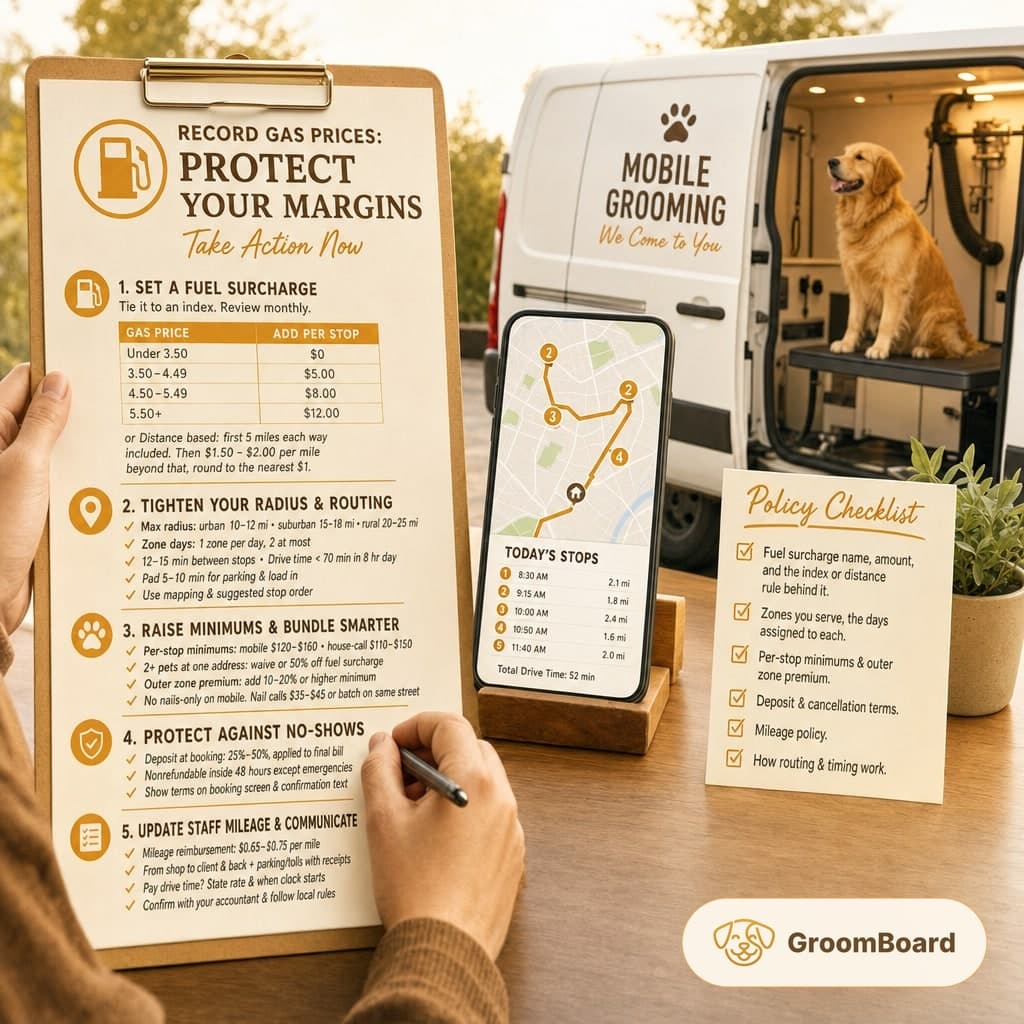
What to do about it
- Add a fuel surcharge now and peg it to an index so it adjusts predictably.
- Shrink your service radius and cluster by zone, one zone per day, to cut drive time.
- Set a per-stop minimum and consider waiving the surcharge for 2 plus pets at one address.
- Reimburse staff mileage at a current market rate and show the policy in writing.
- Display the surcharge on booking, confirmations, and invoices to meet transparency rules.
Gas spike puts wheels-based grooming under pressure
Small Business Trends reports that gas prices hit record highs this September as the national average surged. For mobile vans, house-call groomers, and salons offering pickup and drop-off, fuel is a major variable cost. If you do not move now, those extra miles will drain your margins before you notice.
Set a fuel surcharge today, tie it to an index
Put a fuel surcharge in place this week. Keep it simple, visible, and fair. Peg it to a public index so you are not renegotiating every text. Use the AAA daily average or your government energy price index, then review monthly.
Two workable models:
- Flat per-stop surcharge by price band. Example in your local currency: under 3.50, 0 surcharge. 3.50 to 4.49, add 5.00. 4.50 to 5.49, add 8.00. 5.50 plus, add 12.00.
- Distance based surcharge. Include the first 5 miles each way in your base price. Charge 1.50 to 2.00 per mile beyond that, round to the nearest whole dollar per stop.
Publish the logic in one sentence on your site and booking form. Add a separate invoice line named Fuel surcharge with the amount and the current index month. Review and reset on the first business day each month. Avoid daily changes that confuse clients and staff.
For private property or gated communities with long access roads, apply the distance based rule from the gate, not the mailing address. Spell this out to prevent disputes.
Tighten your service radius and routing
Do not try to be everywhere. Shrink your radius until drive time is a manageable slice of the day.
- Suggested maximum radius: dense urban 10 to 12 miles, suburban 15 to 18 miles, rural 20 to 25 miles. If you already exceed this, prune the outer ring first.
- Adopt zone days. Serve one zone per day, two at most. Target 12 to 15 minutes average between stops and keep total drive time under 70 minutes in an 8 hour day.
- Stack neighbors. Offer a small multi-home incentive, for example 5 dollars off per pet when two next door bookings are back to back, which is cheaper than fuel and deadhead time.
- Pad the schedule for parking and load in. House-call stops add 5 to 10 minutes of non-grooming work. Bake it into your routing so you do not get squeezed.
If you use scheduling software, map your day and accept the suggested stop order to cut backtracking. GroomBoard, for example, shows your stops on a map and suggests a shorter driving order from your chosen start address.
Raise per-stop minimums and bundle smarter
Travel time is the real cost in mobile and house-call grooming. Set a floor that respects it.
- Per-stop minimums: mobile 120 to 160, house-call 110 to 150, depending on your market. If the booked work is under the minimum, charge the minimum instead.
- Two plus pets at one address. Either waive the fuel surcharge or discount it by 50 percent. The second and third dog pay for your wheels better than a solo.
- Outer zone premium. For the outer ring you keep, add 10 to 20 percent to base prices or enforce a higher stop minimum. Fewer trips but profitable ones.
- No quick nails only on mobile. Either set a 35 to 45 travel fee for nails only or batch nail calls on the same street once a month.
Protect against no-shows and late cancels that waste fuel. Take a deposit at booking, 25 to 50 percent, applied to the final bill. Make the deposit nonrefundable inside 48 hours except for emergencies you define. Show these terms on the booking screen and confirmation text.
Update staff mileage and communicate clearly
If employees use their own cars for pickup and drop-off, raise mileage reimbursement to a current market rate. A workable range is 0.65 to 0.75 per mile, paid from shop to client and back, plus parking or tolls with receipts. If you pay drive time, state the rate and when the clock starts. Confirm with your accountant and follow local employment rules.
Policy checklist to publish and enforce:
- Fuel surcharge name, amount, and the index or distance rule behind it.
- Zones you serve, the days assigned to each, and the outer zone premium if any.
- Per-stop minimums and when they apply.
- Deposit amount, refund window, and what counts as an exception.
- Staff mileage reimbursement rate and what miles qualify.
Client messaging should be short and consistent. Add a single sentence to confirmations and reminders that notes the surcharge and the month it is in effect. Example SMS under 160 characters: Fuel costs are up. A fuel surcharge may apply based on your address and the September index. It will appear as a separate line on your invoice.
Check your state or province consumer rules on pricing transparency. Some jurisdictions specify how surcharges must be displayed. Put the fee on your price page, online booking, and invoices so there are no surprises.
Finally, track fuel spend weekly. A simple spreadsheet with miles driven, gallons or liters purchased, and surcharge collected will show if your policy is covering the gap. Adjust monthly, not daily, and keep the explanation the same each time so clients and staff can repeat it without guessing.