
Phillips and Elanco team up, a retail opening for groomers
What to do about it
- Call your Phillips rep to confirm when and which Elanco items will be available, then request launch promos and return protection.
- Build a focused parasite prevention and wellness set, target 45 to 55 percent gross margin, and start with a 300 to 600 dollar wholesale buy.
- Adopt a written flea-found policy that combines a sanitation fee with an offer to sell prevention and a follow up plan.
- Train front desk staff on product fit, contraindications, and when to refer to a veterinarian, and use simple comparison sheets.
- Set par levels and a two week reorder trigger so you never stock out during peak parasite season.
What happened and why it matters
Pet Age reports that Phillips Pet Food and Supplies announced a distribution partnership with Elanco Animal Health. For grooming businesses that already order through Phillips, this could streamline access to Elanco products once available through that channel. The immediate opportunity is to formalize a small but high velocity retail set at the front desk and to pair it with clear policies and staff training.
Call your rep first, then set the retail plan
Before you print shelf tags, confirm timing and assortment. Ask your Phillips rep which Elanco items will be stocked, expected arrival dates, case sizes, and any launch programs. Keep your opening set tight. You want items that solve the exact problems you see in the tub and on the table, not a wall of slow movers.
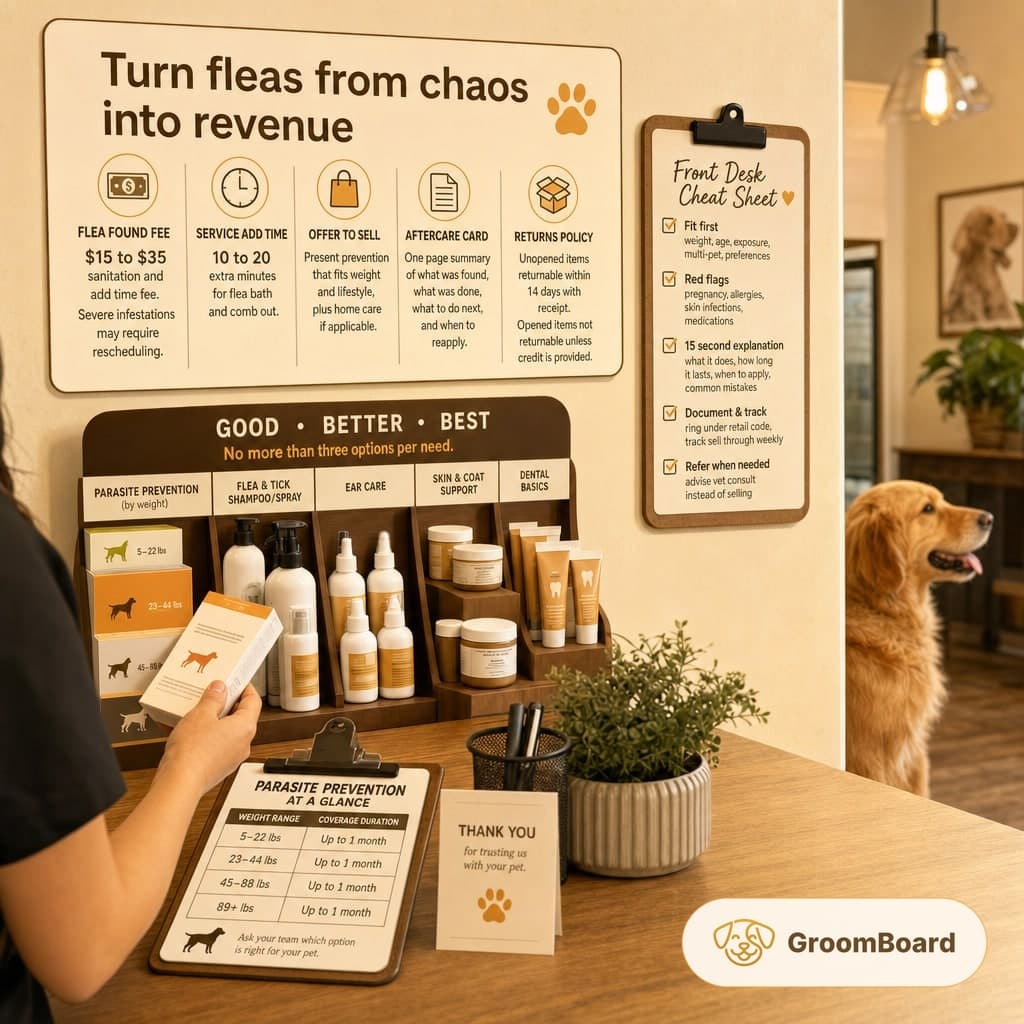
- Assortment framework: parasite prevention in several weights or sizes, flea and tick shampoos or sprays, ear care, skin and coat support, and dental basics.
- Opening order size: 300 to 600 dollars wholesale typically yields 30 to 50 retail units, enough to test demand without tying up cash.
- Margin target: 45 to 55 percent gross margin on OTC retail is a realistic goal. If the landed cost is 18 dollars, price at 32 to 36 dollars unless your local market requires adjustment.
- Price architecture: good, better, best within each category to avoid racing to the bottom. Keep no more than three options per need.
- Placement: put parasite items at eye level within arm’s reach of the point of sale. Use one simple comparison card with weight ranges and coverage duration.
Policies that turn fleas from chaos into revenue
When you find parasites at check-in, you need a consistent response. Combine sanitation fees with an offer to sell prevention or related care so you are not only penalizing the client.
- Flea found fee: publish a 15 to 35 dollar sanitation and add time fee. This covers extra laundry, disinfecting, and delay. Note that severe infestations may require rescheduling.
- Service add time: budget 10 to 20 extra minutes for a flea bath and comb out. Price it as a defined add-on so staff do not negotiate at the counter.
- Offer to sell: when parasites are present or the pet is unprotected, present an appropriate prevention option that fits weight and lifestyle, plus a gentle shampoo or spray for the home environment if applicable.
- Aftercare card: give a one page handout that summarizes what was found, what was done, what to do next, and when to reapply or recheck. Keep it product neutral if you are out of stock.
- Refund and returns: for health items, set a clear unopened return policy within 14 days with receipt. Opened packages are not returnable unless your distributor provides credit.
If you use a booking platform that supports online payments and deposits, consider collecting the flea found fee at checkout via card on file so staff do not hesitate to enforce the policy. GroomBoard users, for example, can take online payments through Stripe and attach fees to tickets.
Front desk training that sticks
Your team does not need to be veterinarians. They do need to understand fit, basic contraindications, and when to refer to a clinic.
- Fit first: teach staff to match by weight range, pet age suitability, indoor or outdoor exposure, multi pet households, and client preference for topical, collar, or other formats.
- Red flags: pregnancy, known allergies, current skin infections, or concurrent medications. If any are present, advise the client to consult their veterinarian instead of selling.
- Simple words: train a 15 second explanation of what the product does, how long it lasts, when to apply, and common mistakes to avoid. No medical claims.
- Documentation: ring items under a retail code, not as a service, and track sell through weekly. Keep a laminated cheat sheet at the desk.
Negotiate hard with your distributor
Use the moment to secure terms and support. Your rep expects these asks.
- Launch promo: request a buy in discount or free goods on first order to hit your target margin while you build velocity.
- Dating or extended terms: 30 extra days on opening orders reduces cash strain.
- Merchandising: ask for shelf talkers, counter displays, and client brochures. One 8 by 10 sign at the desk can double attachment rate.
- Return protection: for new lines, ask for swap out or credit on unopened items after 90 days if they underperform.
- Training: a 20 minute remote product overview for your staff increases confidence and compliance.
Inventory control for peak months
Parasite demand is seasonal in many regions. Set pars now and avoid both stockouts and dusty shelves.
- Par levels: hold four weeks of coverage for your average weekly unit sales. If you sell 8 prevention units per week, keep at least 32 on hand across sizes.
- Reorder trigger: when you drop to two weeks of coverage, place the next order. In the example above, reorder at 16 units on hand.
- Review cadence: every Monday, five minutes to count key facings and update pending orders. Delegate this to the front desk lead.
- Season ramp: increase pars six to eight weeks before your local surge. Reduce gradually as demand tapers.
Handled well, a small Elanco set routed through Phillips could become a steady add on category that improves client outcomes and smooths your day. Start with the phone call to your rep, write the policy, train the desk, and measure sell through weekly. Keep it tight, practical, and profitable.