Health premiums jump for small shops, cut cost and keep coverage
What to do about it
- Set a fixed employer budget per full timer, then choose plan design to fit it.
- Price every groom to fund benefits, usually an extra 3 to 6 dollars per pet covers a modest plan for a small team.
- If premiums spike, consider HDHP plus employer HSA dollars, or level funded small group.
- If traditional group is unaffordable, evaluate QSEHRA or ICHRA, or a taxable stipend with clear wording.
- Lock decisions 30 to 45 days before renewal and communicate changes with scripts and deadlines.
Premium surge hits small employers, grooming shops feel it
Insurance Business reports that small businesses are absorbing roughly 31 percent premium increases rather than cutting health coverage. If you have staff and offer benefits, this hits margins and retention at the same time. The decision in front of you is how to retool benefits and pricing before open enrollment so you keep people and control cash.
Set a benefits budget, then make the plan fit
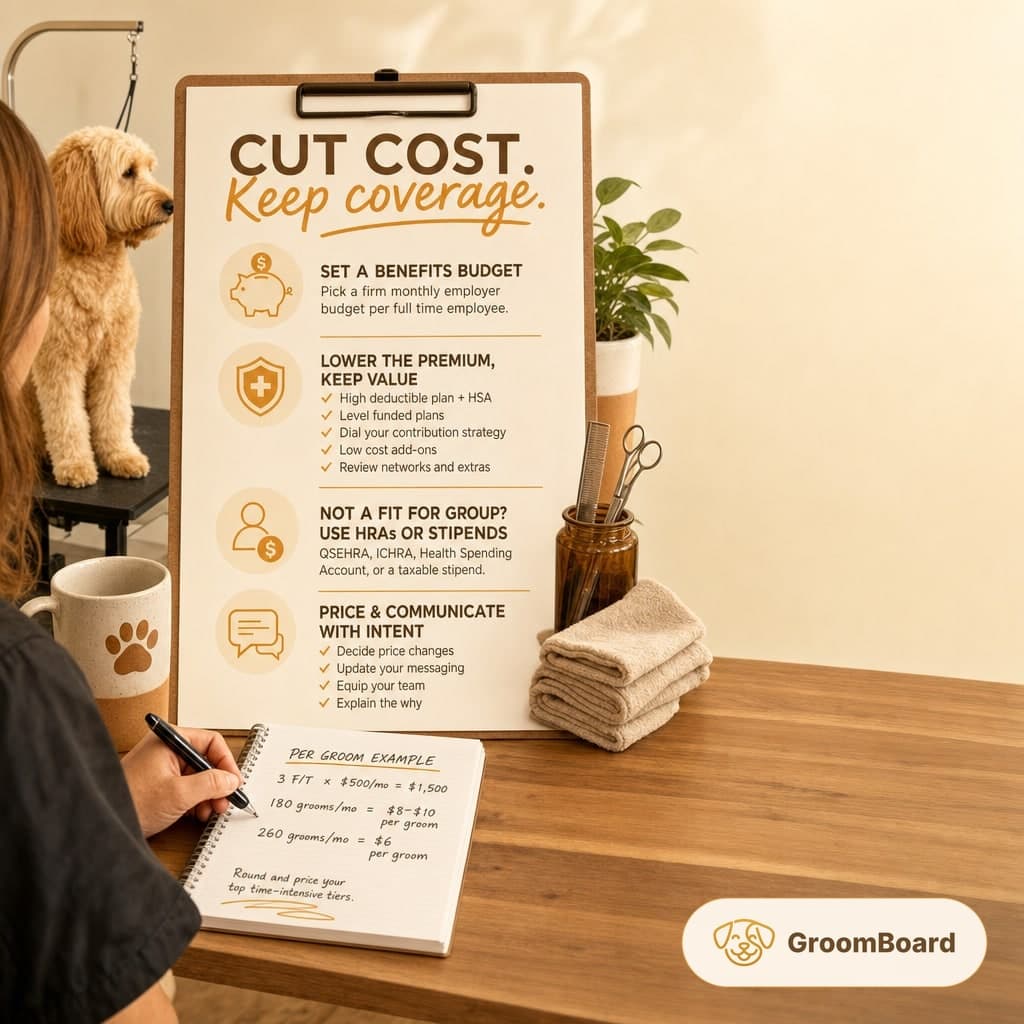
Pick a firm monthly employer budget per full time employee, then evaluate plans that fit within it. Typical targets we see in small grooming shops:
- Employer share of employee only premium: 50 to 75 percent.
- Employer share of dependent premium: 0 to 25 percent, many shops cover none.
- Employer HSA contribution if using a high deductible plan: 50 to 100 dollars per month.
Translate that into a per groom amount so pricing is honest. Example: three full timers, your employer share is 500 dollars each per month, total 1,500 dollars. If you complete 180 grooms per month, add about 8 to 10 dollars per groom to cover benefits. If you do 260 grooms per month, 6 dollars per groom does it. Use your real volume and round to a clean increase on your long haired, double coated, and doodle tiers first.
Lower the premium, keep perceived value
If your renewal is ugly, adjust design before you drop coverage:
- Move to a high deductible health plan paired with an HSA. Raise the deductible, then offset member pain with a defined employer HSA deposit, for example 600 to 1,200 dollars per year, paid monthly. Many staff value the ownership of HSA dollars.
- Consider level funded small group. For healthy, younger teams, level funded plans can price below fully insured and may include a potential year end credit. Ask your broker to quote both.
- Dial your contribution strategy. Cover a higher percentage of employee only, cover less or none for dependents. This protects retention at the core and caps exposure.
- Bolster with low cost add ons. Telemedicine memberships and standalone dental or vision can improve satisfaction for a modest spend compared to rich medical plans.
- Review networks and extras. Narrow networks and trimmed extras like gym reimbursements can reduce premiums without gutting the plan.
Run a side by side showing paycheck impact. Staff accept higher deductibles more readily if monthly deductions go down and you seed an HSA.
When group is not viable, use HRAs or stipends
If your team is too small or the premium is still out of reach, structured reimbursements are the next stop. Options depend on your country and headcount:
- United States, QSEHRA. For employers that are not applicable large employers and do not offer group coverage. You set a monthly reimbursement cap and employees buy their own plans. Requires a formal plan document and compliant reimbursement process.
- United States, ICHRA. Works for a wider range of employers and allows different allowance classes, for example full time versus part time. Employees enroll in individual coverage, you reimburse up to your allowance.
- Canada, Health Spending Account. Reimburses eligible out of pocket medical and dental expenses tax efficiently for incorporated employers. You choose the annual limit.
- Taxable stipend. Simple to administer but taxed as income, and it is not a health plan. Use only if other options do not fit.
Guidance on amounts that land well with grooming staff: 150 to 300 dollars per month for single coverage, 300 to 600 dollars for family toward individual plans or out of pocket costs. Put the allowance in writing and keep the reimbursement workflow tight.
Price and communicate with intent
Benefits shifts fail when pricing and messaging lag. Use this checklist:
- Decide price changes. Use a cost per groom calculation, then implement a clean increase on your most time intensive categories first. For example, add 5 dollars on medium and large full grooms, 3 dollars on small baths, and review creative add ons to avoid discounting.
- Update your menu and scripts. Front desk wording: Our health plan costs increased this season, we are maintaining staff benefits and have adjusted our grooming rates by 3 to 5 dollars depending on size and coat. Thank you for supporting a living wage and benefits for professional groomers.
- Post timelines early. Give staff 30 to 45 days notice of plan changes. Hold a 20 minute meeting with a one page summary, contribution table, and enrollment deadlines.
- Control dependents exposure. If you allow dependents, require payroll deduction authorization forms at election. Missed forms default to employee only coverage.
- Pick one contact. Assign one benefits point person to collect forms and answer questions. Set office hours during the week you roll out.
Modern tools help. If you use automated SMS reminders to clients, include a single sentence about the upcoming price change for two weeks, then remove it. Software like GroomBoard can handle that type of short message alongside your appointment reminders.
Work with a broker, watch the calendar
Practical timing for most January renewals:
- Request quotes 60 to 75 days before renewal. Ask for your current plan as is, a high deductible variant, and a level funded option.
- Select plan and finalize employer contributions 45 days out.
- Announce to staff and distribute summaries 30 days out.
- Collect elections and any waiver forms 15 days out.
- First payroll of the plan year reflects the new deductions and any HSA funding.
If you have fewer than 10 employees and cannot get workable group rates, ask a broker experienced in QSEHRA or ICHRA, or in Canada a provider that administers Health Spending Accounts. If you consider a PEO to access large group pricing, budget for admin fees, often 100 to 150 dollars per employee per month or 2 to 4 percent of payroll, and understand co employment implications before you sign.
Your goals are simple. Fix a budget that protects cash, keep a benefit that matters for retention, and price every groom so you never fund benefits out of your tip jar.