
Stop Washer Breakdowns: A Pet Hair Laundry Maintenance Plan
What to do about it
- Adopt a monthly washer cleaning cycle, every two weeks if you process heavy double coats daily.
- Add a five minute daily lint routine: shake, pre-rinse, wipe gasket, clean dryer screen, empty drain filter as needed.
- Install a nylon lint trap on the discharge hose and replace it weekly or when half full.
- Right-size towel inventory to 40 to 80 bath towels plus microfibers for a 6 to 10 dog day.
- Create a recurring calendar reminder for cleaning tasks, and log issues to catch problems early.
What happened, and why it is worth your time
Pet Age reports that Uproot Clean won SuperZoo’s Best New Product award for its Washing Machine Cleaner Pro. The category is laundry and cleaning, which is usually where grooming operations either run smooth or stall. A low cost cleaner winning attention is a useful nudge to tighten your washer maintenance so towels keep moving and machines last.
Read the full item from Pet Age for the award news. What follows is our operating playbook for groomers who push a washer hard with pet hair and product residue.
A maintenance cadence that keeps the drum spinning
Set a fixed schedule and treat it like a standing appointment. The right interval depends on coat load, but consistency matters more than perfection.
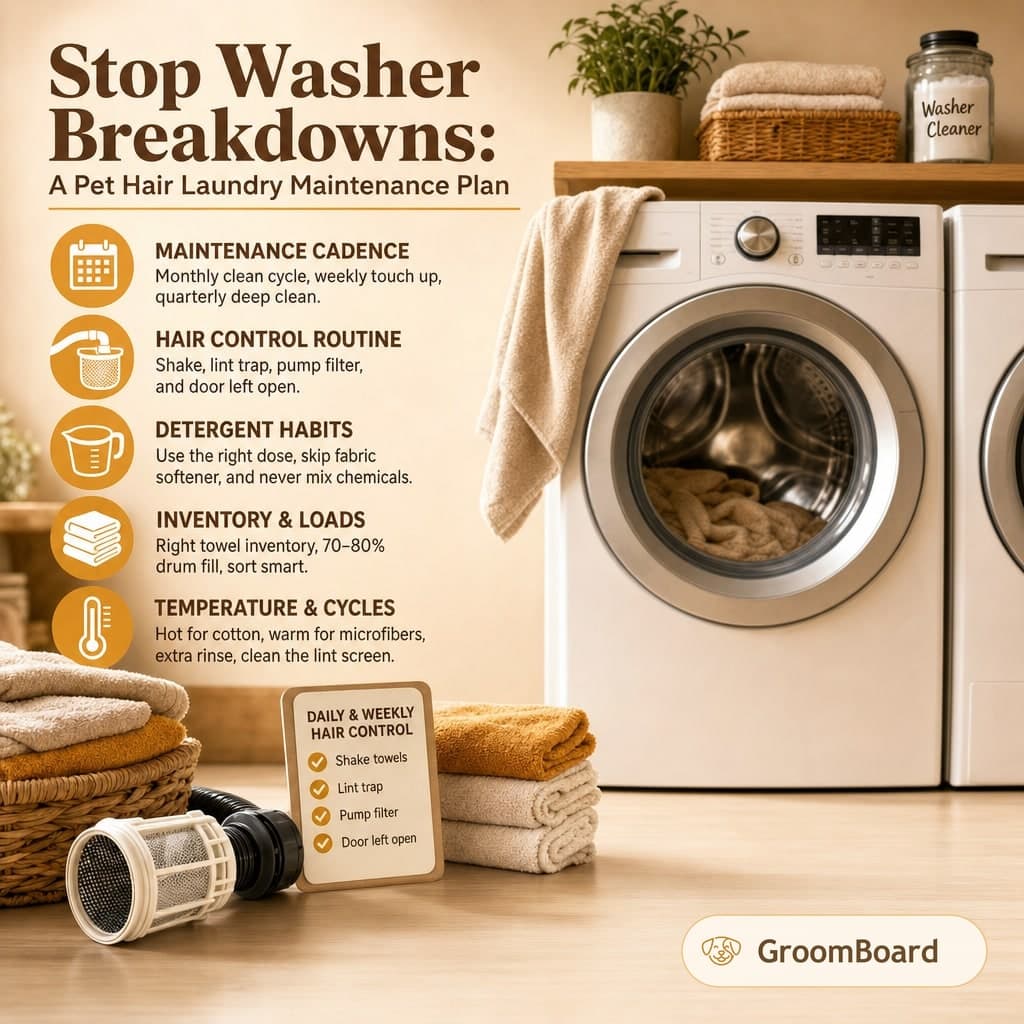
- Monthly baseline: Run a hot, empty cleaning cycle with a washing machine cleaner, follow the label. If your machine has a Tub Clean or Sanitize cycle, use that.
- Heavy hair operations: If you handle 8 to 10 dogs daily with dense or double coats, clean every two weeks.
- Weekly touch up: Wipe the door gasket, glass, and detergent drawer with a microfiber and a mild cleaner. Pull hair out of the gasket folds.
- Quarterly deep clean: Remove and soak the detergent drawer, clean the door gasket channel end to end, and vacuum dust from behind and under the machine.
Budget: most cleaner doses come out to a few dollars per month. One avoided service call can be 150 to 250 dollars. The ROI is obvious.
Daily and weekly hair control that prevents clogs
Hair is your drain pump’s enemy. A short routine keeps it out of places that require tools to reach.
- Before washing: Shake towels outside, then run a 5 to 10 minute no heat tumble in the dryer to knock loose hair into the lint screen. Empty the screen before and after.
- Pre rinse option: A cold quick rinse in the washer before the main wash helps float hair to the drain, which your discharge lint trap will catch.
- Discharge lint trap: Install a nylon lint catcher on the end of the washer drain hose if it empties to a standpipe. Replace weekly or when half full.
- Drain pump filter: Many front loaders have a serviceable filter behind a lower panel. Power off, place a shallow pan and towel, open slowly, and clear hair and grit. Check weekly at first, then set a cadence that matches your build up.
- Door left open: After the last load, leave the door open overnight so the tub dries. This cuts odor and residue.
Detergent habits that help: Use the manufacturer’s dose for your load size. Skip liquid fabric softener since it reduces absorbency and can lock in odors. If you use bleach, never combine with vinegar in the same cycle. If you prefer a vinegar rinse, add it to the rinse compartment only, and never mix chemicals in the drawer.
Right size towel inventory and load management
Running behind on laundry is usually an inventory problem, not just a machine problem. Stock enough towels to get through the busiest day without emergency drying.
- Inventory target: For 6 to 10 dogs, keep 40 to 80 bath towels plus 30 to 60 hand towels, depending on coat types. Add 20 to 40 microfiber drying towels for speed and less lint.
- Load fill rule: Aim to fill the drum to 70 to 80 percent. Overfilling traps hair and under cleans. Underfilling wastes water and time.
- Sort smart: Separate heavily haired towels from lightly soiled ones. Run heavy hair loads first so you can clean traps before lighter loads.
- Temperature and cycles: Use hot for cotton grooming towels if your labels permit, warm for microfibers. A heavy duty or towels cycle with extra rinse helps remove residue.
Dryer settings: Medium heat for cotton, low for microfibers. Clean the lint screen every cycle. Vacuum the dryer lint duct quarterly.
Front loader, top loader, or laundromat, pick the right steps
Front loaders: Be diligent with gasket cleaning and the drain pump filter. Use a washer cleaner on the tub clean cycle monthly. Keep the door ajar when not in use.
Top loaders: Hair floats more, so the discharge lint trap does extra work. Check the agitator and under the rim for residue during your monthly clean.
Laundromat users: Pre shake and bag at the salon. Use shorter cycles back to back rather than one overloaded run. Wipe the machine rim before and after as courtesy. Bring spare nylon lint traps to fit on the standpipe where allowed by the store. Never leave hair messes behind.
Turn the plan into SOPs and reminders
Document a simple standard operating procedure and put it where staff can see it. Example:
- End of day: Shake, pre tumble, clean dryer screen, leave washer door open.
- Friday: Wipe gasket and glass, clean detergent drawer face, check discharge lint trap.
- First of the month: Run washer cleaner on hot or tub clean, clean drain pump filter, vacuum behind units.
Put recurring reminders in your calendar. If you run your schedule in software with a visual calendar, like GroomBoard, add a monthly washer clean task and assign it. Keep a simple log on the side of the machine with dates and initials so you can see if tasks slip.
Stock list to keep on hand: two months of washer cleaner doses, spare nylon lint traps, a stubby screwdriver for filter panels, microfiber cloths for wipe downs, a shallow pan and shop towels for filter servicing, and a small vacuum.
If your machine starts to smell, leaves residue on towels, or throws drain errors, do not push another heavy load. Run the cleaner cycle, service the drain filter, and test with a small load. If errors persist, call for service promptly. A quick fix prevents motor or control damage.
A product award does not change your day, a routine does. Set the cadence this week, then protect it like an appointment on your book. Your towels, your nose, and your repair budget will all benefit.