
Gas is up again, mobile groomers need a fuel surcharge policy
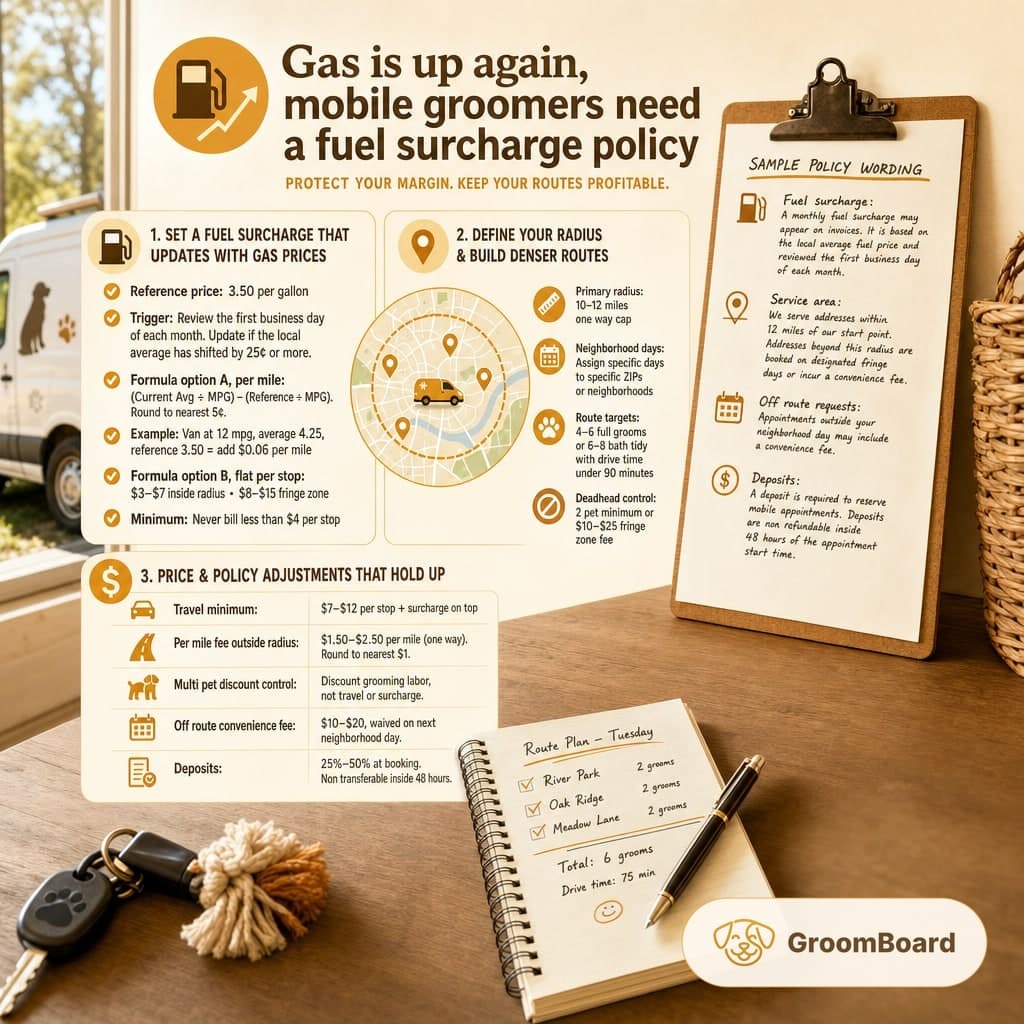
What to do about it
- Adopt a written fuel surcharge that updates automatically with local average prices.
- Tighten your service radius and schedule by neighborhood to raise route density.
- Set a per stop or per zone travel minimum so short hops still cover fuel.
- Offer an off route convenience fee to protect route days and your margin.
- Communicate the change with clear start date, review cadence, and examples.
Prices are rising on the road, protect your margin now
Gulf Coast News Now reports that mobile pet groomers in Lee County are raising prices as gas costs climb. If you run a mobile van or house call route, fuel is one of your biggest variable costs. Without a structure that moves with pump prices, every extra mile comes out of your pocket.
Set a fuel surcharge that updates with gas prices
Pick a reference price, then add a simple formula that adjusts automatically when the local average moves. Keep it visible on your website, booking messages, and invoices.
- Reference price: Choose a round number that reflects your market, for example 3.50 dollars per gallon.
- Trigger: Review the first business day of each month. Update if the local average has shifted by 25 cents or more since last review.
- Formula option A, per mile: Surcharge per mile equals current average price divided by your van miles per gallon, minus reference price divided by miles per gallon. Round to the nearest 5 cents. Example: Van at 12 mpg, average price 4.25, reference 3.50. Fuel cost per mile is 0.35 versus 0.29, so add 0.06 per mile.
- Formula option B, flat per stop: Add 3 to 7 dollars per stop for routes inside your radius, and 8 to 15 dollars for fringe zones. Update monthly using the same trigger.
- Minimum: Never bill less than 4 dollars per stop for a surcharge, even on short hops.
If you prefer clean menu pricing, fold today’s surcharge into base rates, then keep the same math behind the scenes and adjust quarterly. The important part is that it is written, consistent, and time boxed for review.
Define your radius and build denser routes
You make money when you are on the table, not the highway. Tighten your service area and load stops that are close to each other.
- Primary radius: Set a one way cap such as 10 to 12 miles from your start address. Anything outside moves to a fringe zone.
- Neighborhood days: Assign specific days to specific ZIPs or neighborhoods. Example: Tuesdays, River Park. Wednesdays, Midtown. Off route requests either move to the correct day or incur a 10 to 20 dollar convenience fee.
- Route density targets: Aim for 4 to 6 full grooms per route day with total drive time under 90 minutes. For bath tidy days, target 6 to 8 dogs with the same drive time cap.
- Deadhead control: Avoid single pet trips beyond your primary radius. Require a two pet minimum or add a fringe zone fee of 10 to 25 dollars.
House call groomers on foot or small car should use the same logic. Smaller radius, tighter clusters, same convenience fee for off day requests.
Price and policy adjustments that hold up
- Travel minimums: If a stop is under 8 miles round trip, your surcharge may not cover the time lost. Add a travel minimum of 7 to 12 dollars per stop, then apply the surcharge on top when triggered.
- Per mile fee outside radius: Add 1.50 to 2.50 dollars per mile, measured one way beyond your cap. Round to the nearest dollar. Quote it before booking.
- Multi pet discount control: If you discount a second dog, apply the discount on grooming labor, not on the travel or surcharge line.
- Off route convenience fee: 10 to 20 dollars, waived if the client agrees to your next neighborhood day.
- Deposits: Collect 25 to 50 percent at booking for mobile stops. Non transferable inside 48 hours. This keeps fuel and time from evaporating on a no show.
Sample wording you can copy to your site or messages:
- Fuel surcharge: A monthly fuel surcharge may appear on invoices. It is based on the local average fuel price and reviewed the first business day of each month.
- Service area: We serve addresses within 12 miles of our start point. Addresses beyond this radius are booked on designated fringe days or incur a convenience fee.
- Off route requests: Appointments outside your neighborhood day may include a convenience fee.
- Deposits: A deposit is required to reserve mobile appointments. Deposits are non refundable inside 48 hours of the appointment start time.
Do the math on your van so the numbers are yours
Know your own cost per mile. Divide current gas price by your true miles per gallon, not the sticker number. Track a month of fills to confirm. Add a time factor as well. Ten miles through downtown might be 30 minutes each way. Ten miles on a highway might be 10 minutes. Build that reality into where you say yes.
- Grooming time budget: Plan 75 to 105 minutes per small to medium full groom, 45 to 60 minutes for bath tidy, plus 10 to 15 minutes for load in and load out. Then add planned drive time. If a stop breaks the day’s time budget, price it accordingly or move it to a neighborhood day.
- Daily target: Set a daily revenue target that covers five buckets, labor, fuel, vehicle payment, maintenance, and admin time. If a route plan cannot hit target with your current pricing, adjust the travel component or re stack the route.
If you use a scheduling system that maps stops, let it suggest a shorter order and stack addresses into fewer zigzags. GroomBoard can show your day on a map, suggest a tighter order, and collect online deposits through Stripe, which supports the policies above.
Communicate clearly and review on a schedule
Clients do not need a lecture on fuel markets. They need a simple statement of what changes, when it starts, and how to avoid extra fees.
- Announcement cadence: Post on your site, email your list, send a concise SMS to upcoming mobile clients. Keep it under three sentences.
- Effective date: Choose the first of the next month. If bookings are far out, honor the old policy for those scheduled before the announcement date, or split the difference for goodwill.
- Examples help: Include one example invoice line that shows the surcharge at today’s price.
- Review: Put a recurring calendar task on the first business day each month. Update the number and message only if there is a change.
Fuel spikes are outside your control. A written surcharge, smarter routing, and a firm radius put the control back in your hands, and they do it without surprising the clients who keep you on the road.