
Avoid strict dog-per-day caps in home grooming approvals
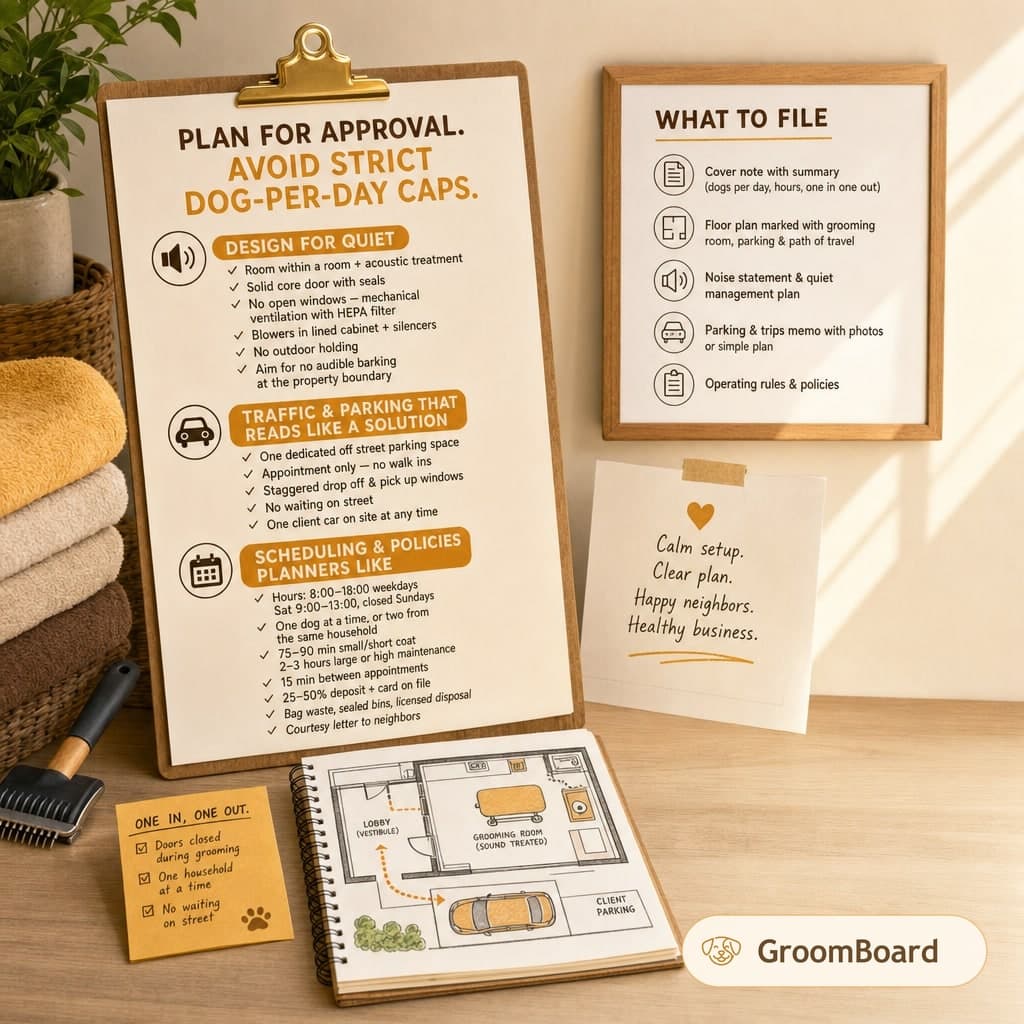
What to do about it
- File with a noise plan, parking plan, and appointment-only policy that limits simultaneous dogs on site.
- Design for quiet: sealed rooms, vestibule, acoustic doors, no outdoor holding, and white noise masking.
- Stagger arrivals, enforce drop-off windows, and cap on-site dogs to one household at a time.
- Preempt objections: meet neighbors, publish your mobile and complaint channel, and log mitigation steps.
- If capped, switch to higher average ticket, specialty work, and longer but fewer sessions to protect revenue.
Approved, but capped at two dogs per day
The East Lothian Courier reports that a dog grooming business won planning approval despite objections, but the permission limits the operation to two dogs per day. For anyone grooming from home or opening a small neighborhood studio, this is the kind of condition that can cut revenue to the bone. Councils often frame limits around noise, parking, and traffic, so the way you design and document your setup matters.
Design for quiet, then prove it
Most objections start with barking and blower noise. Build your room to contain sound, and give planners evidence that outside impact is minimal.
- Room within a room: double stud or resilient channel on at least the shared wall, 5 or 8 mm acoustic underlay, and sealed floor gaps. Budget a modest four figure sum for basic treatment on a single room.
- Doors and seals: use a solid core door with perimeter seals and an automatic drop seal. Add a small lobby or vestibule if possible to stop bark bursts during handover.
- No open windows during appointments: specify mechanical ventilation with a quiet inline fan and HEPA or charcoal filter to control odor without opening windows.
- Blower management: house dryers in a lined cabinet, use flexible silencers on vents, and run at lower settings when possible. Add white noise in the lobby to mask short barks.
- No outdoor holding: state clearly that dogs remain indoors for the entire visit and are never exercised on the street while in your care.
In your application, include a simple noise statement. Aim for no audible barking at the property boundary. Commit to doors closed during grooming, and to limiting dogs on site to one household at a time.
Traffic and parking that reads like a solution
Trip generation is the other lever that triggers caps. Show that your business does not add parking stress or create queues.
- Off street parking: provide one dedicated space that clients can use. If you lack a driveway, obtain written permission for a nearby private space, or schedule strictly outside resident peak times.
- Appointment only: state there is no walk in traffic. No retail, no browsing, and no deliveries during peak neighborhood hours.
- Staggered timing: build five to ten minute drop off and pick up windows and do not overlap them. A simple visual calendar keeps this tight.
- No waiting on street: require clients to leave immediately after handover. Provide text based readiness alerts to prevent early arrivals.
Include a one page parking and trips memo with photos or a plan showing the client space and the path of travel.
Scheduling and policies planners like
Put your operating rules in writing. This reduces speculation during review and gives you something to hold clients to later.
- Hours: propose 8:00 to 18:00 weekdays and a short Saturday block, for example 9:00 to 13:00. Closed Sundays and evenings unless by prior arrangement.
- On site limits: one dog at a time, or two only if from the same household. No more than one client car on site at any time.
- Appointment length: 75 to 90 minutes for short coated small breeds, 2 to 3 hours for large or high maintenance coats. Pad 15 minutes between appointments for turnover and cleaning.
- Deposits and no shows: take a 25 to 50 percent deposit at booking and a card on file. This lets you enforce arrival windows and reduces loiter time.
- Waste and cleaning: bag and store waste inside sealed bins, contract a licensed disposal service or use municipal guidelines, and disinfect floors between appointments.
Send neighbors a short courtesy letter before filing. Explain the appointment only setup, quiet measures, and the single space parking plan. Invite questions and provide your mobile number. A handful of calm conversations will often prevent formal objections.
What to file with your application
Package the submission so the reviewer sees low impact on page one.
- Cover note with a plain language summary of dogs per day, hours, and the one in one out rule.
- Floor plan marked with grooming table, tub, dryer location, door seals, and ventilation. Note that windows remain closed during appointments.
- Noise statement: description of construction and target of no audible barking outside. Offer to log any complaints and adjust operations.
- Parking and traffic memo: one client space identified, no overlap of arrivals, and no retail footfall.
- Operations manual excerpt: intake procedure, crate or hold policy, cleaning protocol, and waste handling.
- Neighbor outreach log: dates you delivered letters or met residents, and a summary of feedback.
Use scheduling software with online booking and SMS reminders to hold those non overlapping slots. GroomBoard, for example, offers appointment rules, client records, and text reminders that make staggered scheduling stick without extra admin.
If you still get a daily cap, make the math work
A two dog per day limit forces a different model. You can survive it, but only with stronger average tickets and low admin overhead.
- Target high value services: hand stripping, creative color, senior or behavior sensitive sessions, and full de shed packages. Price for time, not just breed. A three hour hand strip at a premium rate beats three quick baths you are not allowed to do.
- Add profitable add ons: teeth cleaning by brush, nail grinding, paw balm, sanitary tidy, and deshedding upgrades. Pre select them at booking so the ticket is built before the doorbell rings.
- Raise minimums: set a service minimum, for example a two hour billable minimum per appointment, and publish it.
- Tighten readiness: require exact drop off and text pick up to eliminate idle time. Aim for 85 to 90 percent of booked time as hands on work.
- Reduce dead time: batch prep towels, mix shampoo ahead, and standardize your drying sequence so you do not leak minutes between steps.
If the cap later eases, keep the same discipline and you will feel like you added two more pairs of hands.