
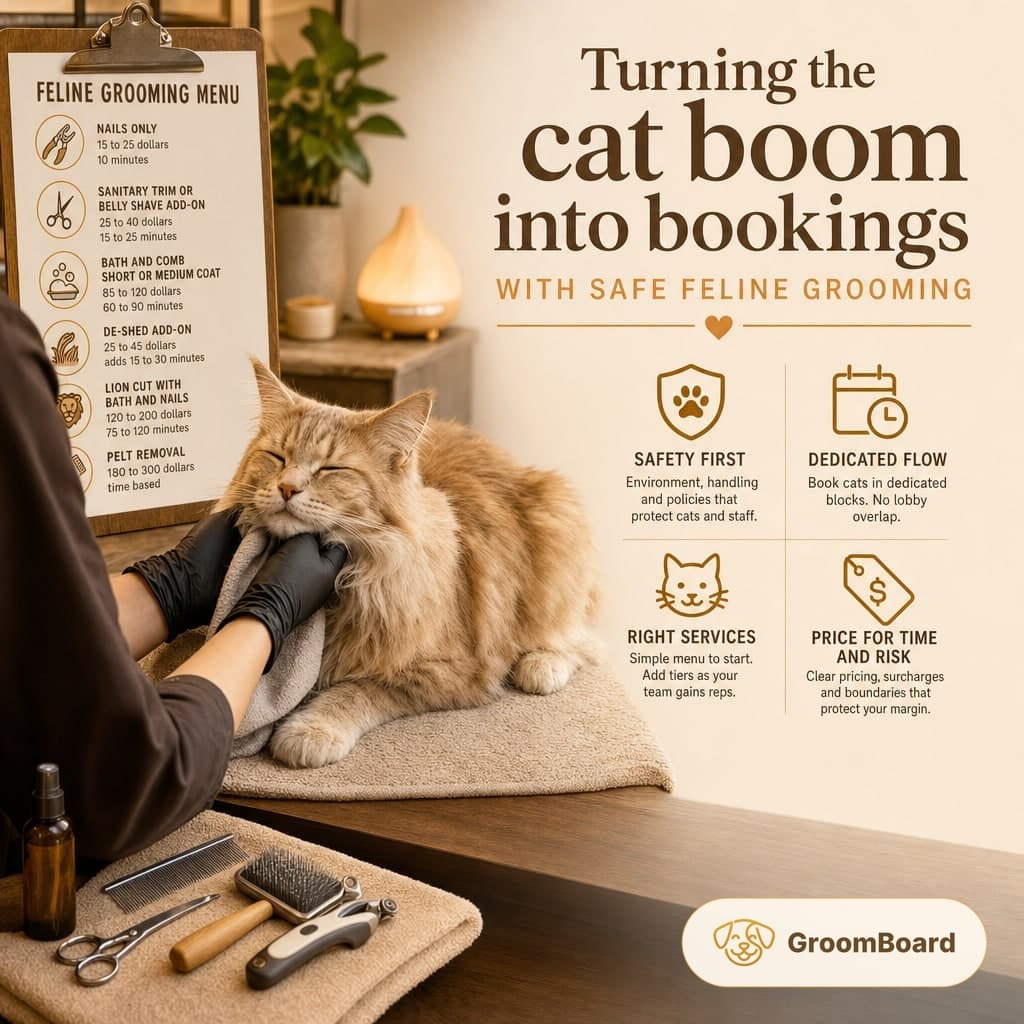
Turning the cat boom into bookings with safe feline grooming
What to do about it
- Set cat-only blocks, ideally mornings, and separate cats from dogs end to end.
- Start with a tight feline menu, clear add-on fees, and a 50 percent new client deposit.
- Invest in low stress handling training and quiet equipment before you advertise.
- Price for tolerance and condition, not just coat length or weight.
- Market to Gen Z cat owners with short videos showing calm, safe handling.
Cat demand is rising, and it can be your next revenue lane
Pet Age reports that new data from the American Pet Products Association points to a cultural boom in cat ownership, with Gen Z and cat dads prominent. More cats in homes means more potential bookings for salons that can groom felines safely. If you currently turn away cats or only take the occasional easy temperament, this is a good moment to formalize a feline offer that fits your space, skills, and risk tolerance.
Decide your scope: what you will take and what you will not
Start with a simple, defensible menu and screening process. Your goal is to handle healthy pet cats, not every cat in the county.
- Pre-screen every cat by phone or form: age, health issues, vaccination status, coat condition, prior grooming history, tolerance level, bite history, and whether the cat accepts a carrier. Require proof of rabies.
- Set a clear acceptance policy: no sedated cats unless administered and released by a veterinarian with documentation, no late pregnancy, no active respiratory illness, and no open wounds or ringworm.
- Begin with cooperative to mildly resistant temperaments only for the first 60 days. As your team gains reps, add a fractious tier with longer appointments and a higher fee.
- Service menu to start: nails only, sanitary trim, bath and comb, de-shed add-on, belly shave, lion cut, pelt removal by assessment. Skip color, baths for brachycephalic cats that cannot tolerate heat or stress, and tools that amplify noise until you have quiet options.
Safety, setup, and equipment that make feline work viable
Feline grooming rises or falls on stress control. Arrange the environment so cats never see, hear, or smell dogs during their visit.
- Scheduling and flow: book cats in dedicated blocks, ideally first thing in the morning before any dogs arrive. No lobby overlap. Direct to table or a quiet holding cabinet on arrival.
- Space: a separate room is ideal. If not, create a dedicated corner, use solid visual barriers, and run a white noise machine. Keep lighting soft and temperatures comfortable.
- Handling: train staff in scruff-free, towel-based control. Use a well-fitted cat muzzle or a soft e-collar only when necessary and only for short durations. Avoid neck loops. A cat bag can be useful for nails and sanitary work on select cats. Never use heat cage dryers.
- Drying: prioritize towel dry plus low air volume, low heat. A quiet cabinet dryer with ambient or barely warm air can work if the cat tolerates it, with constant supervision.
- Tools: quiet clipper bodies, sharp blades, fine and medium combs, soft slicker for dense undercoats, curved and straight shears reserved for cats, nail trimmers plus styptic, enzymatic cleaner for accidents, and pheromone diffusers near intake and tables.
- PPE and sanitation: bite resistant sleeves, nitrile gloves, eye protection for shaving bellies and sanitary areas. Disinfect tables and tools between cats and after any dog use.
- Team: for any cat beyond easy, plan two people present for critical steps like nails and face work. Do not solo a red flag cat.
Pricing, timing, and policies that protect your margin
Price cats for time, risk, and coat condition. Publish starting prices and be explicit about surcharges. These ranges work in most markets, adjust for your local rates.
- Nail trim: 15 to 25 dollars, 10 minutes.
- Sanitary trim or belly shave add-on: 25 to 40 dollars, 15 to 25 minutes.
- Bath and comb, short or medium coat: 85 to 120 dollars, 60 to 90 minutes.
- De-shed add-on: 25 to 45 dollars, adds 15 to 30 minutes.
- Lion cut with bath and nails: 120 to 200 dollars, 75 to 120 minutes depending on tolerance.
- Pelt removal: 180 to 300 dollars, time based. Require an intake assessment, and stop if stress exceeds your safety threshold.
Condition and behavior surcharges: add 15 to 25 dollars for moderate matting, 40 to 80 dollars for severe matting or comb-outs that exceed 20 minutes. Add 20 to 40 dollars for difficult behavior that requires a second handler or additional time. Publish that you reserve the right to decline or stop a groom if safety is at risk, and that partial work is still billable for time spent.
Deposits and no-shows: require a 50 percent deposit for all new feline clients, applied to the final bill. For returning clients, 25 to 50 percent depending on demand. Make the deposit nonrefundable within 48 hours of the appointment, with one courtesy reschedule per year if the slot is rebooked. Late arrivals over 10 minutes convert to nails only or are rescheduled with the deposit forfeited.
Consent and liability: use a feline specific waiver that covers skin sensitivity, clipper irritation, pelt removal risks, tolerance limits, and the possibility of an incomplete groom for safety. Require cats to arrive in a secure carrier, one cat per carrier.
Scheduling, training, and marketing that reach new cat owners
Capacity: start with two to three cat slots per dedicated morning, two mornings per week. Limit to one cat on site at a time or two if you have separate rooms. As your cycle time improves, add a third morning or a single cat slot in the last hour of a quiet afternoon.
Training: book a formal feline handling course for your team. Look for low stress and cooperative care frameworks that cover towel techniques, safe restraint, reading feline body language, and emergency stops. Run two shadow days with an experienced cat groomer if possible. Write a step-by-step SOP and practice on staff cats before you open the service to the public.
Booking tech: set up cat-only service codes, cat blocks on your calendar, and automated prep messages. A system that supports online booking, SMS reminders, and deposits helps reduce no-shows and intake chaos. GroomBoard can do this, including online deposits through Stripe and cat specific service listings.
Client prep message for the day before: feed a normal meal, transport in a hard-sided carrier with a towel, arrive on time, bathroom break before loading, and one cat per appointment unless pre-approved for a bonded pair. Remind clients not to medicate without veterinarian direction and to inform you of any new health changes.
Marketing to Gen Z and cat dads: show the calm. Post 15 to 30 second clips of quiet towel drying, combout results, and a cat relaxing in a pheromone scented space. Use captions that focus on safety and speed. Add feline keywords to your Google Business Profile and website service pages. Run an intro bundle, for example bath, nails, sanitary trim at 10 percent off for first time cats booked in your cat block days, then hold your margins on repeat visits.
Measure and adjust: track average feline ticket, cycle time, rebook rate, and incident rate. Target 100 to 150 dollars average ticket, 75 to 90 minute cycle, 65 percent rebook in 8 to 12 weeks, and zero bites that break skin. If stress or incident rates rise, shorten the menu or reduce capacity until training and space catch up.
The demand signal is there according to Pet Age. If you build a safe, tight feline program now, you will be the name that new cat owners in your area find first.