
Act now: trade talk collapse may hit grooming supply costs
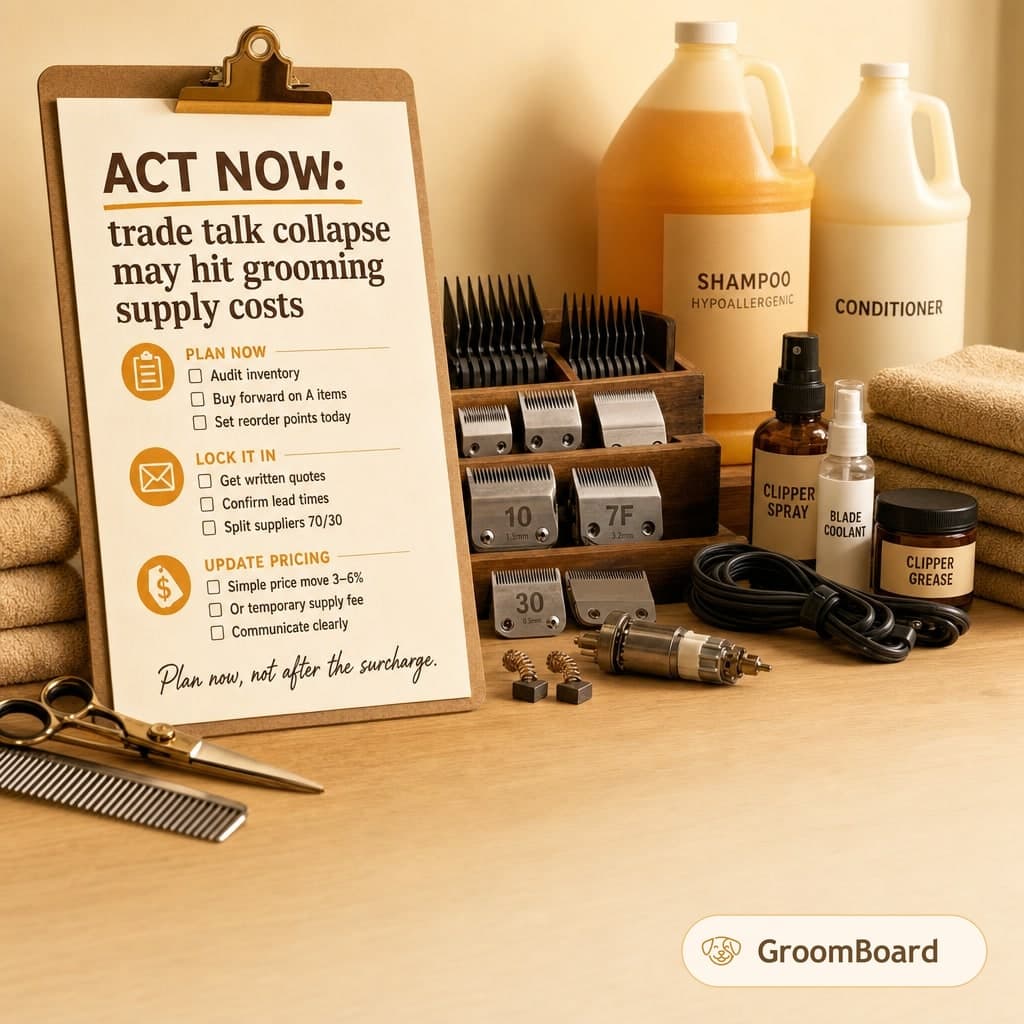
What to do about it
- Complete a 7 day inventory audit and buy 30 to 60 days of A items now.
- Ask vendors for written quotes held 30 days and confirm current lead times before you place orders.
- Prepare a small, time bound price change or a 2 to 4 percent supply fee with clear client messaging.
- Split sourcing across two distributors for blades, clipper parts, dryers, and shampoos to reduce backorder risk.
- Tighten cash flow with deposits on new clients and a consistent no-show policy.
What happened and who it affects
Retail Insider reports that Canada U.S. trade talks have collapsed, and CFIB warns of an immediate and significant impact on small business. For grooming businesses on either side of the border, that can translate to sudden surcharges, currency swings passed through in prices, and longer lead times on supplies and equipment that cross the border.
Assume costs may move first, then availability. Plan inventory and pricing now, not after your distributor emails a surcharge notice.
Audit inventory and buy forward on A items this week
Run a quick ABC review and buy forward where it matters.
- A items, daily use: #10, #7F, #30 blades, snap on combs, blade drive assemblies, clipper cords, carbon brushes, dryer filters, blade coolant, clipper grease, favorite shear maintenance supplies, quick stop, ear cleaner, hypoallergenic and clarifying shampoos, conditioners, de mat sprays, kennel cleaner, trash bags, towels, bandages, clipper spray, and loops.
- B items, regular but not daily: spare force dryer hose and nozzle, stand dryer belt, grooming table arm clamp, clipper hinge assembly, shear bumpers, extra muzzles, nail grinder heads.
- C items, rare: tubs, tables, dryers, clipper bodies, van upfit parts, water pumps, heater elements, electrical breakers.
Targets, our guidance:
- Consumables: carry 30 to 60 days on A items. For mobile, lean to 60 days since a missed shipment stops your route.
- Blades: keep 4 to 6 #10 blades per table and at least 2 of each specialty blade you use daily. Maintain 2 spare blade drive assemblies per clipper model you rely on.
- Dryers: one full set of filters per unit plus one spare hose and nozzle on the shelf. If you use a belt drive stand dryer, keep one spare belt per unit.
- Chemicals: stock your top two shampoos and one conditioner in gallon sizes. If you dilute 16:1, note your actual weekly use and buy to cover at least 4 weeks.
Set reorder points today. Example: when #10 blades drop to 3 per table, reorder to reach 6. When hypo shampoo falls to one unopened gallon, reorder two.
Lock quotes, confirm lead times, and split suppliers
Send three fast emails before you buy:
- Ask for a written quote held 30 days on blades, clipper parts, and chemicals. Place orders against written quotes only.
- Request current lead times by item. Note any items already on allocation or backorder.
- Ask about case or bundle discounts. Even 5 percent on a case can offset surcharges.
Reduce single point failure risk:
- Maintain two active distributors for blades, clipper parts, and shampoos. Split orders 70 and 30 to keep both accounts warm.
- If you are planning a major equipment purchase, get a pro forma invoice and delivery window. Consider paying a small deposit to hold pricing if the vendor offers that option.
- For van upfits and components, ask your upfitter to itemize any pass through fees and to confirm availability of pumps, heaters, inverters, and fixtures before you commit to a slot.
Update pricing and consider a small supply fee
Grooming consumables and wear parts are a small slice of a groom, but sudden increases hit cash flow. Make a decision now, then communicate it cleanly.
- Option 1, simple price move: raise base prices 3 to 6 percent across size tiers. Example: add 3 dollars to small, 5 dollars to medium, 7 dollars to large, 9 dollars to extra large.
- Option 2, temporary supply fee: add a 2 to 4 percent line item or a flat 2 to 3 dollars per pet. Review monthly and remove when costs stabilize.
- Pre book clients: honor existing quotes for 14 days, then new pricing applies.
Client message you can copy, our wording:
We are making a small, temporary adjustment to cover increased supplier and freight costs on grooming consumables. Your appointment time, service quality, and safety standards do not change. For visits booked after DATE, prices will reflect a modest increase or a supply fee. We will review this monthly and remove it as soon as supplier pricing normalizes.
Update your website, service menu, and confirmation texts the same day you decide. If your software supports online payments and deposits, set deposits for new clients at 25 percent to reduce no shows while cash is tight. GroomBoard supports online deposits and SMS reminders, which can help you roll out pricing updates cleanly.
Protect cash flow and schedule
Stability beats perfection in volatile weeks. Tighten the basics:
- Deposits: 25 percent for new clients, 10 percent for high risk slots like Saturdays or first and last of the day.
- No shows: charge a flat 50 percent fee for missed appointments without 24 hours notice. Apply consistently.
- Payment terms with vendors: ask for net 15 or net 30 if you can get it. If paying by card, batch orders to minimize multiple shipping charges.
- Count blades weekly until the market settles. Send out sharpening in smaller, more frequent batches to avoid a full drawer out of action.
Equipment and mobile specifics
If you were timing major buys for fall, decide quickly:
- Dryers and tables: request in stock confirmation before you pay. If out of stock, ask for a comparable model that ships now rather than waiting weeks.
- Clippers: buy one spare body for every two full time stations. Keep one unopened backup in the cabinet.
- Mobile rigs: hold one spare fresh water pump, one set of fuses and breakers, and at least one heater element if your model uses a common part. Keep extra inline filters and hose gaskets.
- Tool maintenance: replace carbon brushes at the first sign of arcing. A three dollar part saves a three hundred dollar rush replacement.
Finally, set a calendar reminder to review pricing and stock in two weeks. Adjust in small steps rather than waiting for a painful catch up.