
Proposed TCPA changes put two-way texting under a microscope
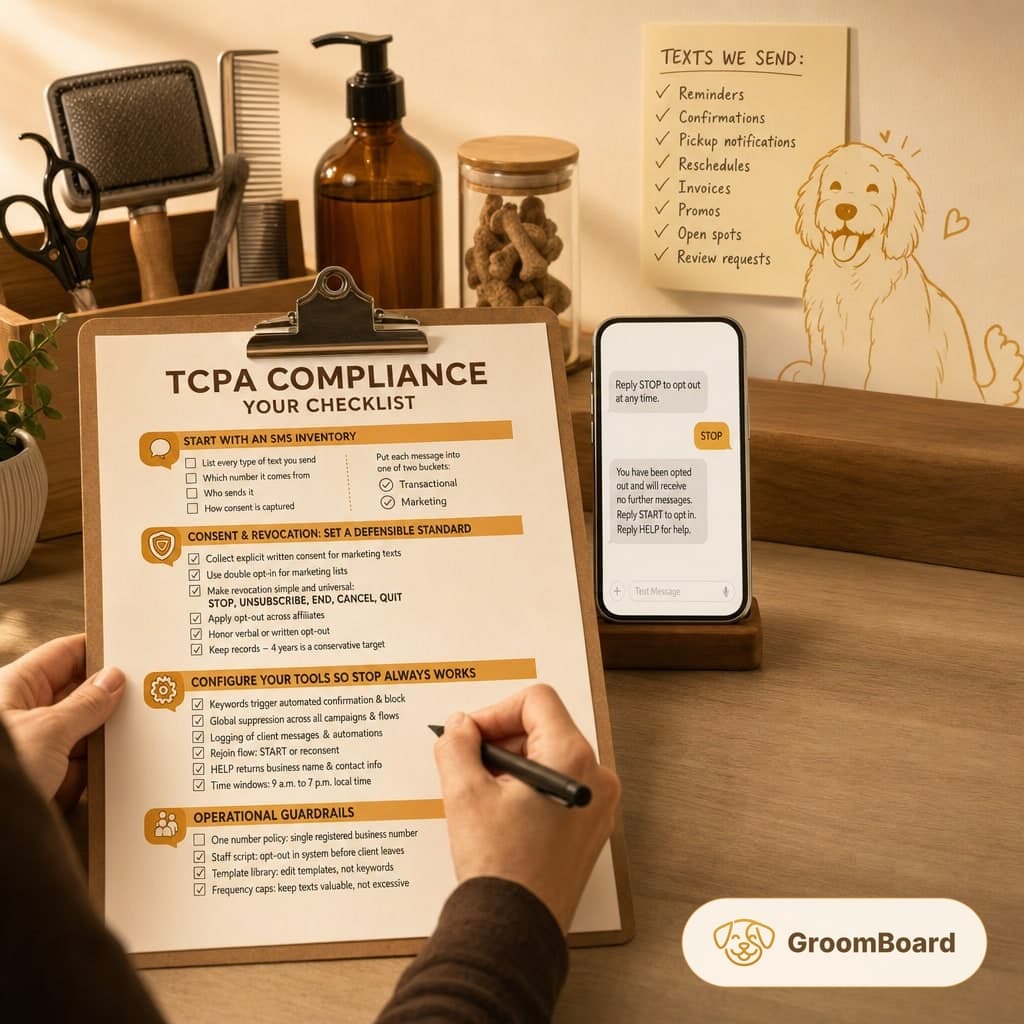
What to do about it
- Map every text you send and classify it as transactional or marketing.
- Collect explicit written consent for marketing texts and log it with a timestamp and source.
- Ensure STOP, UNSUBSCRIBE and CANCEL work automatically and suppress all future sends to that number.
- Centralize texting on one business number, never staff personal phones, and train on immediate opt-out handling.
- Keep consent and revocation records, message content and timestamps for at least four years.
FCC alert: two-way texting, opt-outs and affiliates are in scope
The National Law Review reports that the FCC has issued a proposed rulemaking that seeks to change TCPA rules around two-way texting, revocation of consent and affiliates. If you text clients for reminders, confirmations, pickups or promos, this touches your daily operations. Nothing is final yet, but waiting until it is would be a mistake.
Start with an SMS inventory and risk triage
List every type of text you send, which number it comes from, who sends it and how consent is captured. Put each message into one of two buckets:
- Transactional: appointment reminders, confirmations, pickup notifications, reschedules, invoices, two-factor codes.
- Marketing: open spots, promos, referral campaigns, review requests, reactivation nudges.
Why it matters: transactional messages usually rely on the client initiating a service relationship, but marketing texts require explicit written permission. Many salons blur that line. Clean separation reduces risk and keeps you in control if rules tighten.
Consent and revocation: set a defensible standard now
Use these practices so you are covered even if requirements become stricter:
- Collect explicit written consent for marketing texts: a clear checkbox that is not preselected, labeled with what you will send and how often. Capture timestamp, IP or device, the form version and the phone number.
- Use double opt-in for marketing lists: client submits the form, then replies YES to a confirmation text before any promos go out.
- Make revocation simple and universal: accept STOP, UNSUBSCRIBE, END, CANCEL and QUIT. Suppress all future sends to that number across your lists. If you operate under multiple related names, plan to apply opt-out across them.
- Honor verbal or written opt-out through any channel: if a client says stop by phone or at checkout, log it and toggle them off immediately.
- Keep records: retain proof of consent, message content, timestamps and any opt-out events. Four years is a conservative retention target.
Plain language you can use on your intake form:
- By entering your mobile number you agree to receive appointment communications by text. Message frequency varies. Message and data rates may apply.
- Marketing texts are optional. Check this box to receive occasional promotions and open spots by text. You can reply STOP to opt out at any time.
Configure your texting tools so STOP always works
Whether you text through a grooming platform, a dedicated SMS tool or your phone carrier, confirm these items with a live test today:
- Keywords: STOP and the common variants instantly trigger an automated confirmation and block future sends without staff action.
- Global suppression: a STOP in any conversation blocks all campaigns and transactional flows for that number until the client opts back in.
- Logging: the system stores the raw client message, timestamp and the automation that fired.
- Rejoin flow: clients can restart by texting START or by reconsenting through your form. That event is also logged.
- HELP response: sending HELP returns your business name, contact info and brief instructions.
- Time windows: marketing texts are restricted to reasonable hours, for example 9 a.m. to 7 p.m. local time.
If you use a platform like GroomBoard for SMS reminders, confirm STOP handling is enabled, check that marketing and transactional sends are separated, and verify that consent and opt-outs are recorded against the client record.
Operational guardrails for the shop and the van
- One number policy: route all business texting through a single registered business number. No staff personal phones. This prevents orphaned threads where opt-outs get missed.
- Staff script: if a client opts out in person or by voice, the CSR or groomer triggers the opt-out in the system before the client leaves.
- Template library: store preapproved templates for reminders, pickups and promos. Edit the templates, not the keywords, so STOP and HELP text stays intact.
- Frequency caps: for marketing, cap at one to two messages per week unless the client explicitly agreed to more.
- List hygiene: remove dead numbers and chronic non-responders quarterly to reduce wrong-number complaints.
- Escalation: any complaint about unwanted texts is answered within one business day, the number is suppressed and a log entry is made.
Paperwork, privacy and carrier registration
- Service agreement: add a short SMS section that describes the types of texts, consent, how to opt out and data rates. Keep a signed or digital acceptance on file.
- Website: mirror the same disclosure in your booking flow and privacy policy. Use plain language.
- Carrier registration: if you use a local 10 digit number for campaigns, ensure it is registered for A2P traffic with your provider to reduce filtering. Keep your use case description aligned with what you actually send.
- Audits: calendar a quarterly SMS compliance check. Re-test STOP and HELP, review consent logs, spot check message content and remove any rogue lists or tools.
Bottom line: the proposed changes highlight the same fundamentals that already protect you. Know what you send, get the right consent, make it easy to stop, and keep your receipts. Do that now, and any rule tweaks are an adjustment, not an emergency.