
Screwworm EUA means new intake, isolation, and dosing rules
What to do about it
- Update intake to ask about recent travel, wounds, and visible larvae, and be ready to refuse and refer to a veterinarian.
- Adopt an owner pre-dosing-with-nitenpyram policy where permitted, and collect proof at check-in.
- Create an isolation and sanitation playbook for suspect arrivals, and schedule buffer time for disinfection.
- Charge a defined biohazard or decontamination fee, and require deposits for flagged appointments.
- Confirm your state’s rules on selling or administering OTC drugs, and set a vet partnership workflow.
What happened and why this affects your table
Pets+ reports that the FDA issued an Emergency Use Authorization for Capstar, nitenpyram, to prevent and treat New World screwworm in dogs and cats, and that the FDA revised the EUA for generic nitenpyram tablets. For groomers, this is a biosecurity and liability flag. Screwworm is serious and reportable, and it can turn a routine groom into a containment problem. You do not diagnose, but you can control exposure, screening, and client instructions.
Update your intake and refusal checklist today
Adjust your intake to surface risk before the pet hits your table. Add these required questions on your online form and at check-in:
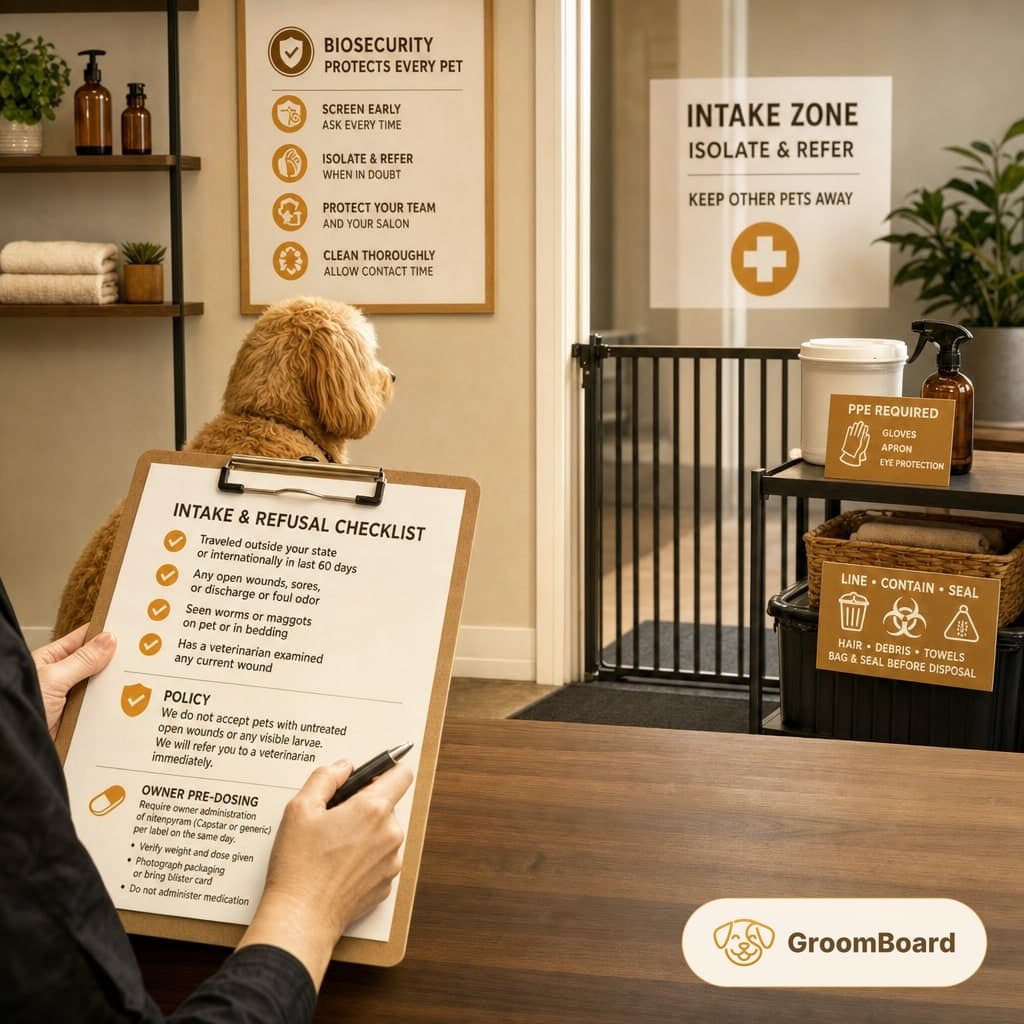
- Has your pet traveled outside your state or internationally in the last 60 days
- Any open wounds, sores, or areas with discharge or foul odor
- Have you seen worms or maggots on the pet or in bedding
- Has a veterinarian examined any current wound
Refusal and referral criteria, share this with clients in writing:
- We do not accept pets with untreated open wounds or any visible larvae. We will refer you to a veterinarian immediately.
- If a pet arrives in violation of the policy, the appointment is cancelled and the full fee or deposit is forfeited.
Policy wording you can copy:
Biosecurity policy: For the safety of all pets, any dog or cat presenting with open, untreated wounds or visible larvae will be refused and referred to a veterinarian. If recent travel or wounds are disclosed at booking, we may require additional documentation or owner administration of an over the counter product per label before service.
Scheduling and payment guardrails:
- Flag higher risk bookings and require a 50 percent deposit.
- Build a 20 minute disinfection buffer after any appointment with disclosed wounds that a veterinarian has cleared for grooming.
- List a biohazard or decontamination fee, for example 25 to 75 dollars, when extra containment, laundry, and disinfectant use are required.
Owner pre-dosing with nitenpyram, and legal boundaries
The EUA signal involves nitenpyram tablets, including Capstar and a generic version. Where allowed, consider a client preparation step that keeps medication decisions with the owner:
- Require owner administration of nitenpyram per the product label and the pet’s weight on the same day as the appointment for pets with recent travel or any healed wound history.
- At check-in, verify weight, ask the owner to confirm the dose given, and photograph the retail packaging or have them bring the blister card.
- If your state allows retail sale of OTC pet products by groomers, you can stock a small quantity and sell to clients. If not, provide a purchase list and send them to a local retailer or veterinarian.
- Do not administer medication unless your state specifically permits it for groomers. When in doubt, have the owner dose at drop-off while you observe and document, or refer to a veterinarian.
Documentation to add to the client record:
- Travel disclosure and dates, wound status, and veterinarian clearance if applicable.
- Owner attestation of OTC dosing, product name, and time of administration.
Isolation, PPE, and sanitation for suspect cases
If a pet arrives with visible larvae, do not proceed. Put the pet and owner in a designated intake zone, keep other animals away, and refer them to a veterinarian immediately. Steps to protect your space and staff:
- PPE for any contact, gloves, waterproof apron, and eye protection. Dispose of single use items in a sealed trash bag.
- Contain hair, debris, and any contaminated towels in a lined bin with a lid, then bag and seal before disposal.
- Clean visible soil with detergent first, then disinfect tools and surfaces with a salon approved disinfectant, following the product’s labeled contact time. Plan your schedule to allow that full contact time.
- Launder towels and loops used in the intake zone on a hot cycle with detergent, and dry on high until fully dry.
- Ventilate the area, and keep that station closed until cleaning and disinfection steps are fully complete.
For pets with minor, vet cleared wounds where grooming is necessary, work in a containment setup:
- Use a table mat or disposable barrier you can discard after use.
- Assign one station and one set of tools, then clean and disinfect before reuse.
- Schedule these pets at the end of a block, and avoid mixing with daycare or walk in nail trims.
Team training and veterinary coordination
Give your staff a short screwworm protocol they can run without you:
- How to spot red flags on intake and when to stop and escalate.
- Who to call first, the owner’s veterinarian or a local practice you partner with.
- How to decline kindly and document, including photos only with owner consent.
- Where to find the disinfectant, PPE, and the station closure checklist.
Build a relationship with a local veterinarian. Ask for their preferred referral language, whether they recommend owner dosing of nitenpyram before grooming in specific scenarios, and how they want you to handle suspected cases. Screwworm is reportable, so know the number your veterinarian wants you to use for urgent referrals. Keep that information printed at the desk and in every van.
Adjustments for mobile and solo operators
Mobile vans and solo shops have fewer containment options, so tighten sequencing and supplies:
- Screen travel and wounds before you confirm the route, and schedule any vet cleared wound groom as the last stop of the day.
- Carry extra gloves, aprons, sealable trash bags, and at least one spare set of tools so one set can sit wet for full disinfectant contact time while you use the other.
- Use a disposable table barrier and disposable toweling for any suspect intake, then bag and seal.
- Do not proceed inside multi pet homes if one pet is suspect. Refer and reschedule after veterinary care and cleaning.
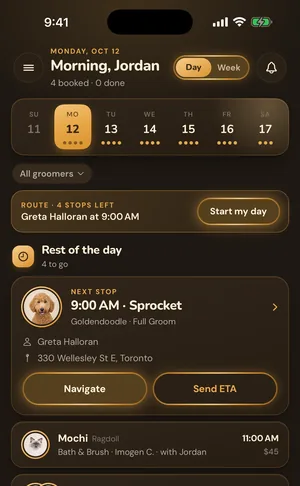
If you use software for online booking and reminders, add the new screening questions and send prep instructions automatically. For example, GroomBoard can add required intake questions, send SMS reminders with your owner dosing policy, and collect deposits and signatures on your updated biosecurity policy.