
New over the gum toothbrush systems, refresh your oral care menu
What to do about it
- Add two brushing tiers and allocate 6 to 12 minutes per dog based on behavior history.
- Price basic brushing at 12 to 25 dollars and a premium gel add on at 20 to 35 dollars, with weight based tiers.
- Use consent language that limits services to cosmetic, above the gum brushing and refers disease cases to a veterinarian.
- Merchandise one to three take home kits at checkout and target about 50 percent gross margin.
- Train staff on a fixed protocol and single use or client assigned brushes to keep sanitation tight.
What happened and why it matters
Pets+ reports that ChewMate launched three toothbrush systems at SuperZoo, designed for over the gum cleaning for proactive pet parents, vet techs, and groomers. For grooming businesses, this points to a safer, well defined oral care lane that can raise average tickets and support simple retail bundles without straying into veterinary dentistry.
Decide your service menu and timing
Keep it simple so staff can deliver consistently and you can book it cleanly.
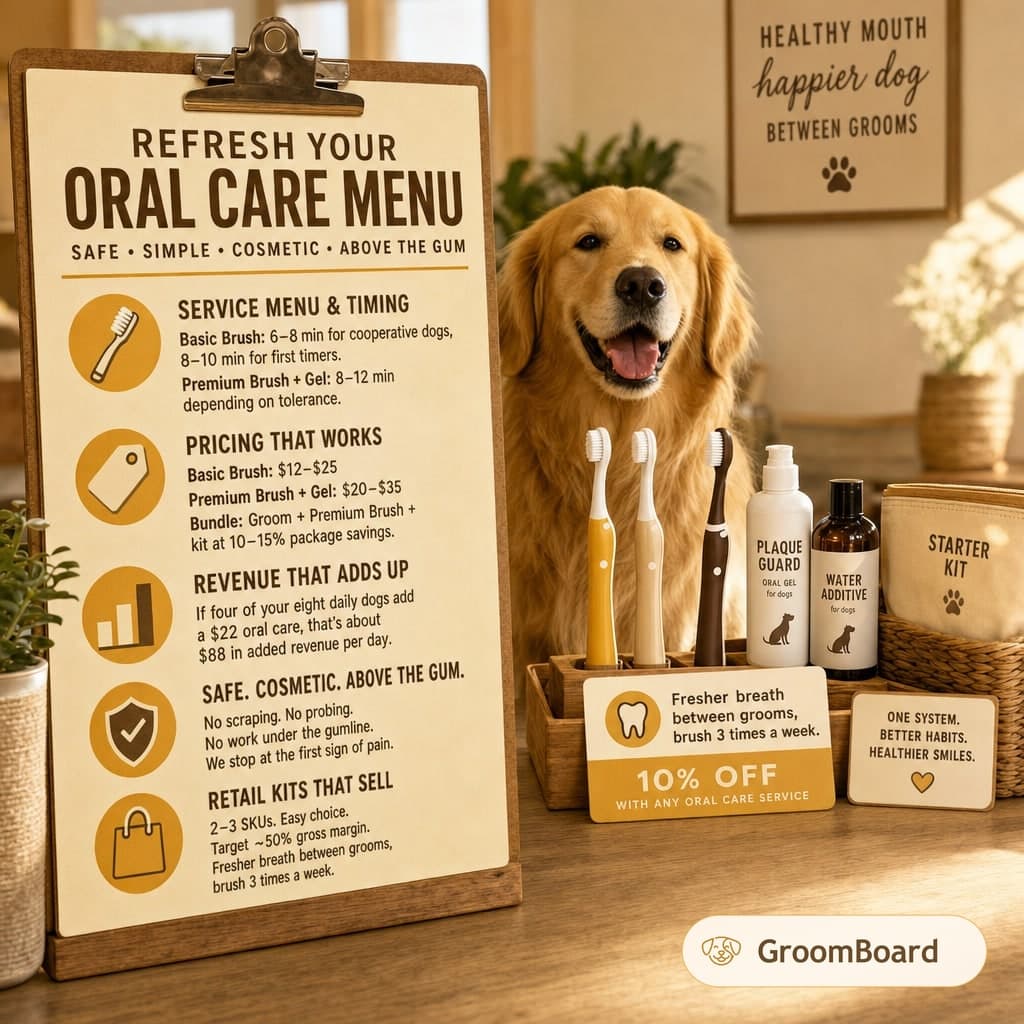
- Basic Brush: Above the gum brushing with a pet toothpaste or water only. No scraping, no probing, no subgingival work. Time: 6 to 8 minutes for cooperative dogs, 8 to 10 minutes for first timers.
- Premium Brush plus Gel: Basic Brush plus an enzymatic gel or plaque guard applied to all accessible surfaces. Time: 8 to 12 minutes depending on tolerance.
- Behavior filter: Offer brushing only to dogs that allow safe mouth handling. Skip brachycephalic dogs that show respiratory strain, dogs with suspected oral pain, or any dog that stress pants hard when the mouth is handled.
Scheduling tip: Book first time oral care with an extra 4 minute buffer. For repeat clients who tolerate well, you can standardize at 6 to 8 minutes. Mobile groomers can limit to Basic Brush to keep the truck sequence tight.
Pricing that holds margin and lifts tickets
Set clear, weight based tiers so reception and online booking do not guess.
- Basic Brush: 12 to 25 dollars. Suggested tiers: up to 20 lb at 12 to 15 dollars, 21 to 50 lb at 15 to 20 dollars, over 50 lb at 18 to 25 dollars.
- Premium Brush plus Gel: 20 to 35 dollars. Suggested tiers: up to 20 lb at 20 to 24 dollars, 21 to 50 lb at 24 to 30 dollars, over 50 lb at 28 to 35 dollars.
- Bundle: Groom plus Premium Brush plus take home kit at a 10 to 15 percent package savings versus a la carte. Example: a 30 dollar Premium Brush and a 20 dollar kit sold together for 45 dollars.
Revenue math: If four of your eight daily dogs add a 22 dollar oral care, that is about 88 dollars in added revenue per day. Even at two per day you are adding roughly 40 dollars, which covers consumables and still moves net profit.
Software setup: Create two add ons with weight tiers and default durations. If you use GroomBoard, set weight based pricing on the add on and make it selectable in online booking, then include a short brushing description in SMS reminders so clients expect the upsell at drop off.
Compliance, consent and scope of practice
Stay squarely in cosmetic grooming and avoid any representation that you are diagnosing, treating, or preventing disease. Train staff to stop at the first sign of oral pain.
- Scope: Above the gum brushing only. No scraping, scalers, curettes, or anything under the gumline. No dental claims.
- Red flags to decline and refer: Loose or fractured teeth, bleeding gums, severe halitosis with drooling, oral masses, ulceration, or obvious pain. Provide a simple vet referral note.
- Template consent language you can copy: We offer cosmetic tooth brushing above the gumline only. We do not diagnose, treat, or prevent dental disease. If we observe signs of dental disease or pain, we will stop and recommend veterinary care.
- Records: Note tolerance, tools used, and any observations. Photograph anything you refer to a veterinarian.
Retail kits and merchandising that move
Limit choice and make the decision easy at checkout. One good system for small dogs, one for medium to large, and one gel or water additive is enough for most salons.
- Assortment: 2 to 3 SKUs on the counter, not a wall of options. Include one starter kit and one refill item.
- Margin: Target about 50 percent gross margin on retail. If your kit costs 10 dollars, price it near 19 to 22 dollars. If your market supports it, keystone plus a dollar is fine for small ticket items.
- Placement: Keep kits at eye level at checkout with a small card that reads, Fresher breath between grooms, brush 3 times a week. Keep claims cosmetic.
- Attach to service: Offer 10 percent off a kit when purchased with the Premium Brush the first time. Include a care card with at home steps.
- Rebuy plan: Add a reminder to the next appointment card that says, Bring your brush back for a refill discount, or offer a refill price on gel when clients present the empty.
Training and sanitation checklist
- Tools: Use single use finger pads or dog specific brush heads that are either disposable or assigned to the client and stored in a labeled, sealed bag.
- Disinfection: For reusable handles or accessories, clean then soak in a pet safe disinfectant per label contact time. Rinse and dry fully before reuse.
- Protocol: Muzzle only if it does not restrict breathing and the dog tolerates it calmly. Start with gentle lip lifts, touch and treat if needed, then short strokes on canines and premolars, finishing with incisors. Aim for 30 to 45 seconds per quadrant for cooperative dogs.
- Comfort: Use calm restraint, no chin straps that block panting. Stop immediately if you see pawing at the mouth, gagging, or a pain reaction.
- Consumables: Track paste and gel usage. A pea sized amount per quadrant is plenty. Overuse wastes cost and increases swallowing.
- Coaching clients: Send home one sentence care advice on the receipt, Brush three times a week, tiny amounts, stop if you see bleeding.
Staff rollout: Do three in house practice sessions on tolerant staff dogs, then add the service to two friendly client dogs per day for the first week. Review notes at week end and adjust timing and pricing if staff are consistently running over.