
Use NASC’s treat seal to tighten retail and in-salon safety
What to do about it
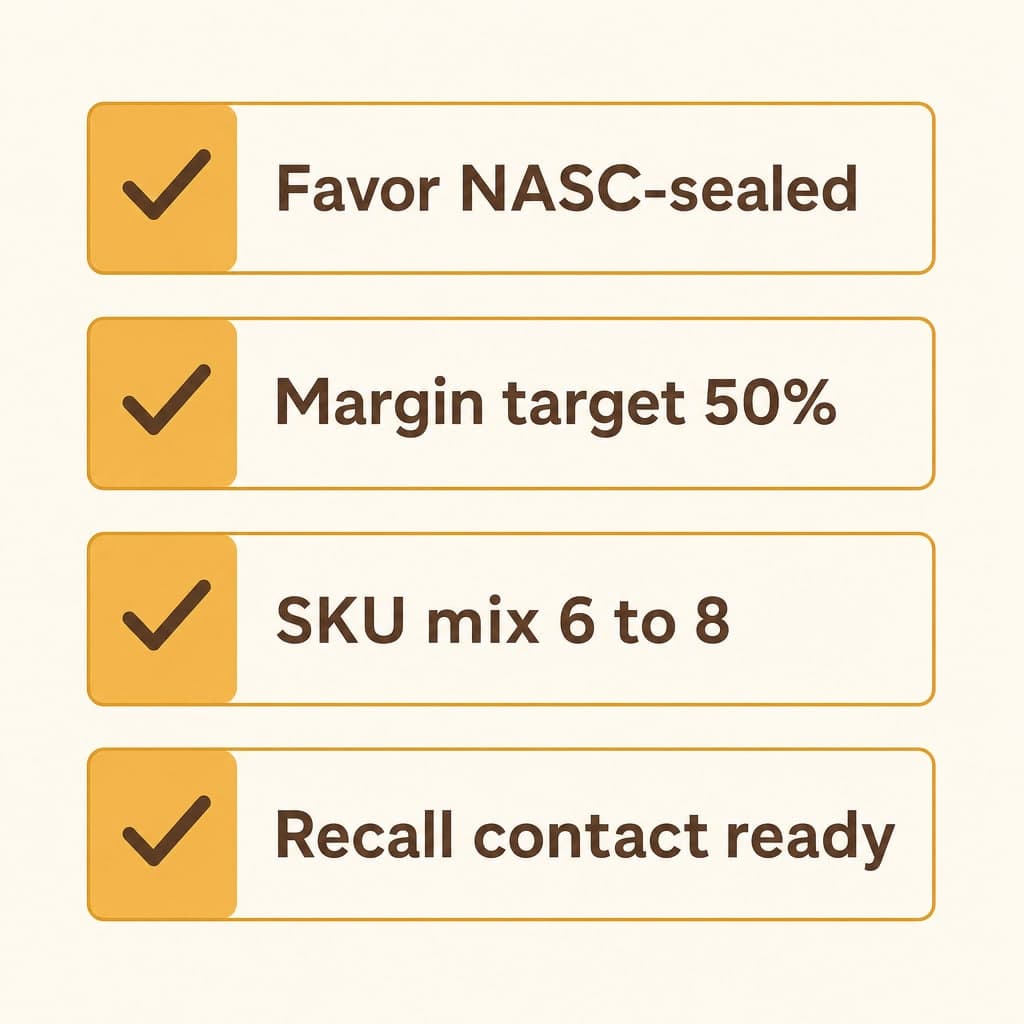
- Favor treats that carry the NASC Treat Program quality seal when updating vendors.
- Target a 50 to 55 percent gross margin on treats with keystone plus pricing.
- Stock a tight mix of 6 to 8 core SKUs that cover training, chews, and dental.
- Add client facing signage and a simple staff script about what the seal means.
- Put a written recall plan in place, with vendor contacts and 24 hour shelf pulls.
What happened, and why groomers should care
Pets+ reports that the National Animal Supplement Council has launched a Treat Program with a quality seal, and that four suppliers have joined since the March launch. If you retail treats or use them for cooperative care, a recognized compliance standard gives you an immediate way to lower product risk and to explain your buying choices to clients. Use this to clean up your assortment, your signage, and your vendor paperwork.
Make the seal your buying standard
Operationally, move to a simple rule: if a suitable option exists with the NASC Treat Program quality seal, it goes on your shelf first. If you keep a legacy favorite without the seal, document why you are keeping it, for example a therapeutic niche, a unique format, or a local maker clients expect. Revisit those exceptions each quarter.
- Vendor screening questions to add: Are you in the NASC Treat Program, do you provide lot specific test documentation on request, what is your recall communication protocol and contact, what is shelf life, are lot numbers human readable on each unit, do you have MAP.
- Paperwork to file per SKU: current COI if you require it, sell sheets, price list with case counts, recall contact name and email, copy of any quality seals the product carries.
- Reorder rule of thumb: keep 3 to 4 weeks of cover. Reorder at 1.5 weeks of remaining stock. If you sell 4 bags per week on a SKU, reorder when 6 bags remain.
Merchandise the assurance without overpromising
Clients do not need a lab lecture. They need to know you picked smarter products. Use small, consistent language on shelf tags and at checkout.
- Shelf tag note: We prioritize treats from brands participating in the NASC Treat Program for added quality oversight.
- Counter card: Ask us which treats meet the NASC Treat Program standard. We will help you pick the right option for your dog.
- Staff script, 15 seconds: We favor treats from companies in the NASC Treat Program. It is a compliance standard for treat makers. We like the extra oversight. Here are our top choices.
Online, add a single line to your services page or booking confirmation: We use and retail treats from brands that participate in the NASC Treat Program when available. This is a clean differentiator that reads as diligence, not hype.
Price and plan your treat mix
Treats carry workhorse margins if you price with intent. Set margin targets, then build a compact planogram that moves.
- Margin target: 50 to 55 percent gross margin on most treats. Use keystone plus, typically 2.2 to 2.5 times landed cost for small bags and singles. Round to clean price points that match your area.
- Price bands clients accept: training treats 8 to 12 dollars per bag, single ingredient chews 4 to 12 dollars each depending on size, dental chews 2 to 3 dollars per stick or 12 to 24 dollars per multi pack.
- Core SKU mix, 6 to 8 total: two soft training treats in different proteins, two single ingredient chews in two sizes, one limited ingredient biscuit, one dental option, one high value topper or freeze dried bite, plus one seasonal or promo slot.
- Facing and space: one peg per SKU, two pegs for your top two sellers. Keep top sellers at hand height for faster add ons at checkout.
Audit monthly. Drop the lowest performer and test a new sealed option. Protect your retail space from bloat by keeping to the 6 to 8 SKU target.
In salon use, safety notes, and client consent
If you use treats for cooperative care, make it deliberate. Stock sealed training treats in two proteins, for example poultry and fish or red meat, and one low crumb option for clean tables. Keep a printable ingredient list at the table or on a clipboard for quick checks during intake.
- Intake prompt to add: Any treat allergies or dietary rules we should follow today. Poultry, beef, fish, grain free, low fat, other.
- Color code or sticker your treat jars by protein so a helper can grab safely without reading a label mid groom.
- If a client brings their own treats, tape the bag to the record with a note, client provided treats only, and return remainder at pick up.
Document consent. A simple checkbox in your booking flow or paper intake avoids confusion later. If you use software with client and pet records, save treat notes so the whole team can see them. You can also add a line in your SMS reminder, for example, we use small amounts of training treats in the salon unless you opt out. GroomBoard supports both client records and SMS reminders if you need a lightweight way to capture and surface this.
Recall readiness and vendor follow through
Even with a seal, you still need a recall plan. Write it once and rehearse it once a year.
- Contacts: keep the recall email and phone for each vendor in one sheet. Test that the email works at onboarding.
- Lot tracking: when you receive cases, circle or record the lot range in your receiving log. You only need the lot for current cases on hand.
- Shelf pull rule: if a recall or quality notice hits, pull affected lots within 24 hours, hold in a labeled tote, and message any clients you know purchased that SKU.
- Refund flow: offer exchange or refund at the counter, no debate. Track quantity and date so you can claim vendor credit.
Review your assortment after any incident. Replace the affected item with another NASC sealed option if one is available. If not, source a temporary stand in and set a reminder to revisit.
Where to learn more
For details on participation and what the seal signifies, see the original report from Pets+. Use their coverage as the conversation starter with your reps and distributors.