
Arizona minimum wage bump: what groomers should change now
What to do about it
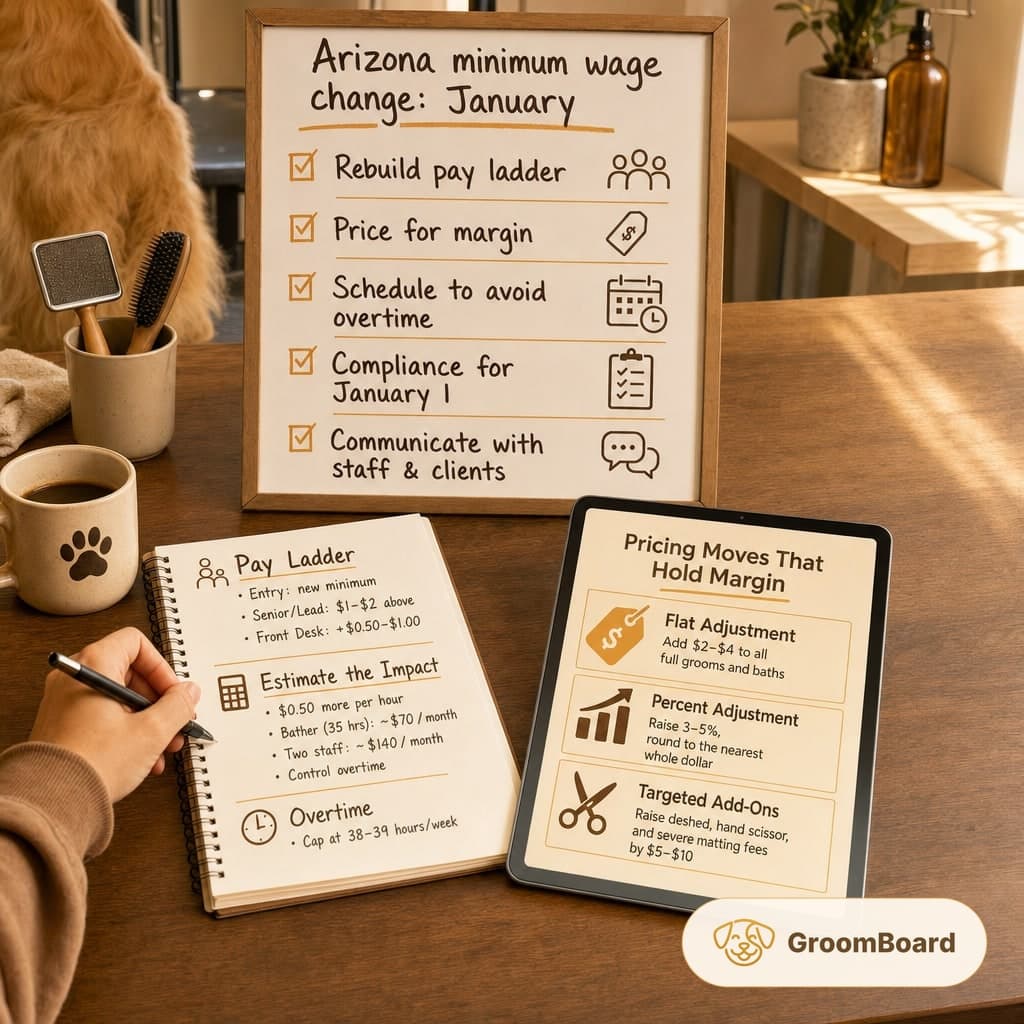
- Map every role to the new floor and set leads 1 to 2 dollars above entry to avoid compression.
- Add a simple 2 to 4 dollar price increase per groom, or 3 to 5 percent, by December billing.
- Cap hourly staff at 38 to 39 hours and push overflow to part time or another day to avoid overtime creep.
- Update Arizona labor posters and any city specific notices, and document any tip credit use.
- Communicate changes to staff and clients 30 days ahead with clear, neutral wording.
What changed, and who it hits
KTAR News 92.3 FM reports that Arizona’s minimum wage will increase by 50 cents in January. Grooming salons and mobile operators with employees will see higher hourly and overtime costs for bathers, assistants, and reception.
If you are in a city with its own higher local minimum, verify that rate and its January change. Build your plan now so you are not rushing holiday week.
Rebuild your pay ladder this week
Start by mapping every non-commission role to the new floor. Anyone below it moves up. Then preserve your internal differentials so you do not compress your team into a single rate.
- Entry bather or assistant: set at the new floor.
- Senior bather or lead kennel tech: set 1 to 2 dollars above entry.
- Front desk: match complexity. If they handle phones, checkout, and prebooks, set them 50 cents to 1 dollar above entry.
Estimate the impact: each minimum wage hour costs 50 cents more. A bather at 35 hours per week adds about 70 dollars per month. Two staff at that schedule add about 140 dollars per month. Overtime cost rises in step, so control hours.
If you use a tip credit, review Arizona’s rules before you change pay. Document tip reporting, provide written notice to tipped staff, and monitor that tips plus cash wage meet or exceed the required minimum every pay period. If you do not want to manage that admin, pay at or above the full minimum and treat tips as extra.
Pricing moves that hold margin
The cleanest fix is a small, broad price change rather than a special fee. Make it predictable and permanent.
- Flat adjustment: add 2 to 4 dollars to all full grooms and baths. With 8 dogs per day over 22 working days, a 3 dollar increase brings roughly 528 dollars per month, which more than covers one bather’s increase and some overhead.
- Percent adjustment: raise 3 to 5 percent, then round to the nearest whole dollar to keep the menu tidy.
- Targeted add ons: raise deshed, hand scissor, and severe matting fees by 5 to 10 dollars. These are labor heavy and customers understand the premium.
Update your posted price list, booking confirmations, and website by early December. Sample client note:
Effective January 2, our service prices will increase by 3 dollars per appointment. This reflects higher labor costs and helps us keep appointments on time and quality consistent. Thank you for supporting a local small business.
If you use software with weight based price tiers and online deposits, make the new tiers now, then set the go live date for the first week of January. GroomBoard supports weight based pricing, online booking, and deposits if you want one place to update and publish changes.
Schedule to avoid overtime creep
Overtime multiplies your new base rate, so build schedules that respect a hard weekly cap.
- Cap hourly staff at 38 to 39 hours per week, then move overflow to a part timer or split the load across days.
- Set daily production targets by role. Example: one bather supports 6 to 8 small to medium dogs or 5 large dogs, depending on coat condition and equipment. If you are exceeding that, add a float for cleanup and laundry in peak blocks.
- Block out an unbookable 30 minute reset after the morning rush for cleanup and turnover. Paid time is still real time. Plan it.
Track real clocked hours, not the schedule on the wall. Pay for prep, cleanup, and required training time.
Compliance tasks for January 1
- Update Arizona labor law posters and any city specific minimum wage postings. Source from the state site or your poster vendor.
- Refresh written pay policies: timekeeping, overtime approval, tip handling, and when pay changes take effect.
- Confirm your payroll system reflects the new rates and that any overtime or holiday rules calculate from the updated base.
- Audit service fees and surcharges for card payments. Decide whether to bake processing costs into prices or keep a visible fee. If you keep a fee, follow card brand rules.
Staff and client communication that lands
Staff first: tell your team two to three weeks ahead, privately for their personal rate and publicly for the policy. Hit three points clearly: their new rate, when it starts, and any schedule changes. Ask them to initial a one page summary for your files.
Clients next: publish the January date and the new price line. Keep it short and neutral. Post it at the desk, on social, and in booking confirmations. If you charge deposits or no-show fees, restate those now too. Sample wording:
A nonrefundable 20 percent deposit is required to hold appointments. No-shows or same day cancels forfeit the deposit. Reschedules with 24 hours notice move the deposit forward once.
Review within 60 days. Compare January and February payroll percent to sales. Target total payroll for a small salon at 35 to 45 percent of sales depending on your mix. If you are above that range after the change, nudge prices or reduce overtime.
Final check: if you operate in a city with a higher local rate, like Flagstaff historically has, use that higher number in all of the planning above.