
Gas at $4.48 squeezes mobile margins, add a fuel surcharge now
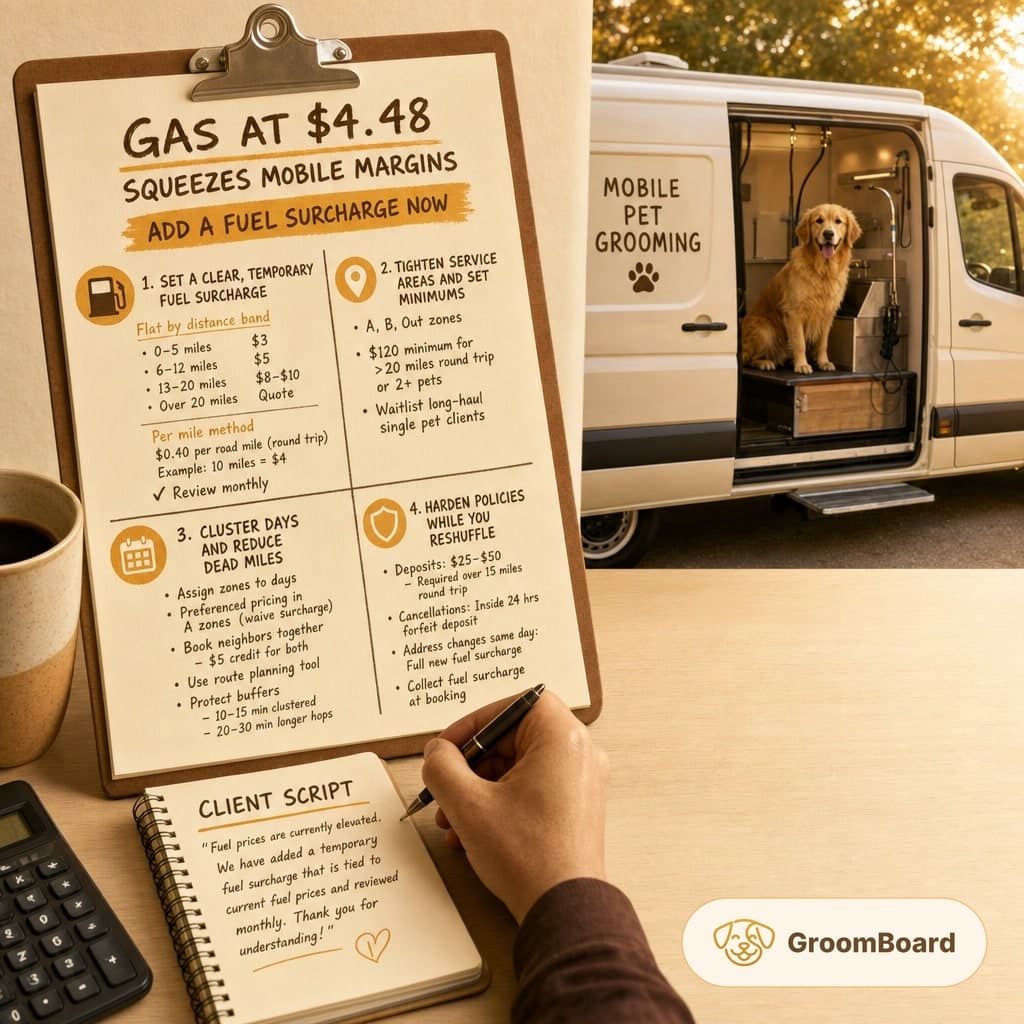
What to do about it
- Add a temporary, line‑item fuel surcharge tied to local average prices and review it monthly.
- Use distance bands or a per‑mile formula to set 3 to 10 dollars per stop based on route density.
- Tighten service areas, cluster neighborhoods by day, and set a minimum stop revenue target.
- List the surcharge on every estimate and invoice with a short explanation that it is temporary.
- Harden cancellation rules and deposits while you rebook to clusters, since last‑minute gaps waste fuel.
What changed and who it affects
Outlook India reports that US gas prices have reached 4.48 per gallon, with political commentary around the increase. Mobile groomers feel this first, since fuel is a major variable cost per stop. If you roll a van, every extra mile now drags down margin unless you adjust pricing and routing immediately.
Set a clear, temporary fuel surcharge
Make the change simple for clients and simple to audit. Add a separate line item called Fuel surcharge. State that it is temporary and pegged to your state average price. Review it monthly on the first business day and adjust up or down. Remove it when prices fall below your threshold.
Our guidance on numbers:
- Flat by distance band, best for clarity: 0 to 5 miles from your base, 3 dollars per stop. 6 to 12 miles, 5 dollars. 13 to 20 miles, 8 to 10 dollars. Over 20 miles, quote case by case or require a multi pet minimum.
- Per mile method, best for mixed routes: Charge 0.40 per road mile of round trip drive allocated to that stop. Example: 10 round trip miles adds 4 dollars. This approximates a 12 miles per gallon van at 4.48 per gallon fuel cost and leaves room for idle time.
Whichever you choose, publish it, put it on every estimate and invoice, and train your script so the team uses the same single sentence explanation. Keep it unemotional and factual. Temporary surcharge tied to current fuel prices, reviewed monthly.
Pick a floor and a cap so the math does not create odd cents. Floor 3 dollars, cap 12 dollars per stop unless the client is beyond your service area.
Tighten service areas and set minimums
Low density zones kill profit when fuel spikes. Prune now.
- Redraw your map into A, B, and Out zones. A is your densest neighborhoods. B is workable with clustering. Out is paused or only served at a premium.
- Set a minimum stop revenue. Our guidance: 120 dollars minimum for any booking that requires more than 20 miles round trip, or require at least two pets at the address.
- Move single pet, long haul clients to a waitlist for the day you already plan to be in that area. If you do not run a waitlist tool, prebook them to your next zone day and offer the first time block available.
If you are salon based, consider keeping a posted same day mobile radius for elderly or special needs clients only, with a clear premium. The same surcharge guidance applies.
Cluster days and reduce dead miles
Fuel spikes reward discipline. Build neighborhood days and protect them.
- Assign zones to days. Example: Mondays and Thursdays for ZIPs closest to base. Tuesdays in the north suburbs. Reserve one half day for outliers that meet your minimum.
- Offer preferred pricing in A zones by waiving the surcharge there during the transition. You will book more density where it helps most.
- Book neighbors together. Ask every client if a same day next door referral is available. If a neighbor books, give both clients a 5 dollar credit that does not stack with other discounts.
- Use a tool that maps your day and suggests a shorter driving order. GroomBoard does this for mobile routes and can shave unnecessary backtracking without GPS tracking.
Block travel buffers. Ten to fifteen minutes between clustered stops, twenty to thirty minutes for longer hops. Protect the buffers so a single late client does not force wasteful zigzags.
Harden policies while you reshuffle
Clustering only works if clients show up or are home. During a fuel spike, last minute changes burn cash.
- Deposits: Take a 25 to 50 dollar deposit for mobile appointments, applied to the groom. Require deposits for any stop with a round trip drive over 15 miles.
- Cancellation: No-shows or cancels inside 24 hours forfeit the deposit. Same day address changes incur the full new fuel surcharge if you can accommodate the move.
- Payment: Collect fuel surcharges at booking, not at the door. Add it as a line item on the estimate so there are no surprises.
Client script you can use in email or text: Fuel prices are currently elevated. We have added a temporary fuel surcharge that is reviewed monthly and tied to local averages. It will be removed as soon as prices fall below our threshold.
Review monthly and commit to rolling it back
Pick a trigger price to end the surcharge, for example your state average returning below 3.75 per gallon. State it in your policy so clients know there is an end point. When you adjust down, tell people. A short note builds trust and keeps referrals coming.
For reference to the news that prompted this guidance, see the report from Outlook India.