
How Often Should You Groom Your Dog? A Schedule by Coat Type
"How often should I bring her in?" is the question groomers answer more than any other, and the honest answer is that it depends on the coat. A poodle and a beagle can live in the same house and need completely different schedules. Below is the schedule most professional groomers work to, coat by coat, plus the signs a dog is overdue and what owners can do between visits so each groom is easier on the dog.
Grooming Schedule by Coat Type
These are working ranges, not rules. A dog that swims every weekend, rolls in everything, or lives where burrs grow will sit at the short end. A dog in a very short clip can stretch toward the long end, as long as the nails do not.
Why Growing Coats Need 4 to 6 Weeks
Poodles, doodles and the long silky breeds have hair that keeps growing instead of shedding out. Loose hair stays trapped in the coat, and every walk, nap and scratch twists it into tangles. Left alone, tangles tighten into mats that sit against the skin, pull every time the dog moves, and hide hot spots underneath.
At 4 to 6 weeks, a groomer can brush the coat out and keep the length the owner wants. At 8 to 12 weeks, the same coat is often matted badly enough that the kind thing is to clip it short and start again. That is where most "I asked for a trim and she came home shaved" stories begin. Our guide to matting prevention explains why groomers will not brush out a pelted coat.
Why Double Coats Are Different
A golden retriever or a husky does not need a haircut. It needs its dead undercoat removed, because that undercoat is what ends up on your floor, and packed undercoat traps heat and moisture against the skin. A professional bath, high velocity dry and deshed every 6 to 12 weeks does that, and doing it more often during the spring and fall coat blow makes a visible difference at home.
What a double coat should not get is a shave down to the skin. It does not keep the dog cooler, and the coat may grow back patchy. Our guide on why you should never shave a double coated dog covers the details, and the deshedding treatment guide covers what a good one includes.
Nails, Ears and Glands Run on Their Own Clock
Even if the coat can wait 12 weeks, nails usually cannot. Most dogs need a nail trim every 3 to 4 weeks, and a dog whose nails click on the floor is overdue. Long nails change how a dog stands and walks. Many salons sell nail trims as a quick walk in service between full grooms for exactly this reason. Ears on drop eared and hairy eared breeds benefit from a check and clean at every groom, and dogs prone to ear infections may need it more often under their vet's direction. Anal glands are a vet and groomer judgment call for each dog; our anal gland guide covers when they need attention.
Signs Your Dog Is Overdue for a Groom
- You can feel tangles or knots behind the ears, under the collar, in the armpits or on the back legs
- Hair is growing over the eyes or the dog is squinting through it
- Nails click on hard floors or curve toward the pads
- Hair between the paw pads is long enough that the dog slips on smooth floors
- The coat smells even after a bath at home, or feels greasy at the skin
- Shedding has suddenly doubled (for double coats, the undercoat is ready to come out)
- The sanitary area is matted or dirty
What Owners Can Do Between Visits
The best grooming schedule is a partnership. Owners who brush at home get longer coats, shorter appointments and calmer dogs. For growing coats, that means a slicker brush followed by a metal comb, working all the way to the skin; if the comb catches, the brushing was not done yet. For double coats, an undercoat rake once or twice a week during shedding season. For every dog, short handling sessions with the feet, ears and mouth make the groomer's job safer and the dog's day easier.
For Groomers: Turning a Schedule Into a Habit
Every groomer knows the client who means to rebook in five weeks and calls in eleven. The fix is to book the next appointment before the dog leaves, at the interval that suits that coat, and to remind the client in a way they will actually see.
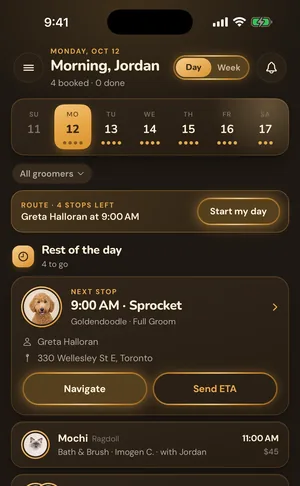
GroomBoard keeps a usual interval on each pet's profile. When you mark a groom completed, it proposes the next appointment at that interval (six weeks by default), at the same time of day, checked against your open times, and books it in one click with the option to text the client the new time. Day before reminder texts then go out at the hour you choose, so the slot you held actually gets used. Sending this guide to a client whose doodle keeps coming in matted is a good way to start the conversation. Start your free 7 day trial →