
Dog Anal Gland Expression: A Groomer's Guide (and Where to Draw the Line)
Anal gland expression is one of the most requested grooming add ons, and one of the most misunderstood. Done at the right time, it relieves a genuinely uncomfortable dog. Done routinely on every dog "just in case," it can actually cause the very problems clients are trying to avoid. This guide covers the external technique groomers use, why less is often more, and the clear line where a groom stops and a vet visit begins.
What Anal Glands Are (and Why They Matter)
Anal glands, or anal sacs, are two small, pea sized pockets located just inside the anus, at roughly the 4 and 8 o'clock positions. They produce a strong smelling fluid that dogs use for scent marking. In a healthy dog, they empty naturally every time the dog passes a firm stool. Most dogs go their entire lives without ever needing manual expression.
Problems arise when the glands don't empty properly: the fluid thickens, the sac becomes impacted, and without relief it can progress to infection or a painful abscess. That's the scenario expression is meant to prevent. But the key insight, backed by current veterinary thinking, is that expression should address a problem, not be a default service for every dog on the table.
The Most Important Rule: Don't Express Healthy Glands
This is where a lot of well meaning grooming goes wrong. Repeatedly expressing glands that don't need it can:
- Irritate and inflame the sac lining and surrounding tissue
- Build up scar tissue in the ducts, narrowing them over time
- Create a dependency cycle: the glands lose the ability to empty on their own, so the dog needs ongoing expression it never would have required
The takeaway: express based on signs, not on schedule. If a dog shows no symptoms of fullness, the healthiest thing you can do is leave the glands alone. This is genuinely good for the dog and protects you professionally.
Signs a Dog Actually Needs Expression
One or two of these together suggest the glands may be full. None of them? The dog probably doesn't need expressing.
External Expression: The Groomer's Method
Groomers perform external expression only, applying gentle pressure to the outside of the glands. (Internal expression, where a gloved finger is inserted into the rectum, is a veterinary procedure and outside a groomer's scope.) The general external technique:
- Glove up and have tissue or a cloth ready: the fluid is potent and can spray.
- Lift the tail to expose the area and locate the two glands at the 4 and 8 o'clock positions just below the anus.
- Apply gentle pressure with thumb and forefinger, pressing inward and slightly upward toward the anal opening through a tissue.
- Release, don't force. If the fluid doesn't come with gentle pressure, stop. Forcing risks trauma, and may indicate an impaction that needs a vet.
- Clean the area thoroughly and note what came out.
External expression relieves mild fullness but does not empty the glands as completely as the internal method, and applying excessive force carries a risk of rupture. Gentle is the entire game here.
Know When to Stop and Refer
This is the most important professional skill in this entire topic. Groomers are not licensed to diagnose or treat medical conditions. Stop immediately and recommend a veterinary visit if you see:
- Blood or pus in the fluid
- A hard, swollen, or painful gland that won't express with gentle pressure
- Redness, an open sore, or weeping near the anus, possible abscess
- Crying, flinching, or aggression indicating significant pain
- Any growth or lump you can feel near the glands
Healthy gland fluid is typically thin and brownish. Anything thick, bloody, or pus like is a medical issue. A simple, kind referral, "I noticed her glands were quite full and a little uncomfortable, I'd recommend having your vet take a look", protects the dog and your liability. For older dogs especially, see our senior dog grooming guide for the broader health check mindset.
Pricing and Communicating the Service
Anal gland expression is typically offered as an add on in the $10 to $20 range. But given everything above, consider how you frame it: rather than auto adding it to every groom, position it as a service you provide when the dog shows signs of needing it. Clients respect a groomer who says "her glands looked fine today, so I left them alone, that's actually healthier" far more than one who upsells a procedure the dog didn't need. For building a clear, honest add on menu, see our guide to pricing add on services.
Keep Health Notes That Travel Between Visits
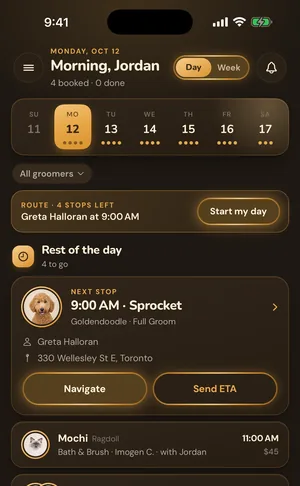
Anal gland history is exactly the kind of detail that should follow a dog from groom to groom, which dogs are prone to fullness, which you've referred to a vet, and what the fluid looked like last time. With GroomBoard, you can store per pet health notes and flag clients so every appointment builds on the last. Start your free 7 day trial →
This article is general grooming guidance, not veterinary advice. Always defer to a licensed veterinarian for diagnosis or treatment of anal gland disease.