
Health premiums are rising, here is your shop owner playbook
What to do about it
- Ask your broker for small group, level funded, and individual HRA comparisons within 14 days.
- Set a clear employer contribution policy, for example 60 percent employee only, 0 percent dependents.
- Price in the increase now, add 1 to 3 dollars per dog or a 2 to 4 percent list update.
- Consider QSEHRA or ICHRA if group coverage is too costly or network choices are weak.
- Lock timelines, quotes by 60 days from renewal, final choice by 30 days, team notice at 21 days.
Rates are going up, plan your response now
Times Union reports that state regulators say health insurance rates will increase next year. If you buy coverage for yourself or sponsor a plan for staff, that is a direct hit to your 2027 margin unless you act before renewals.
Below is a practical playbook to contain the cost, keep your team covered, and price your services so the increase does not quietly erase your profit.
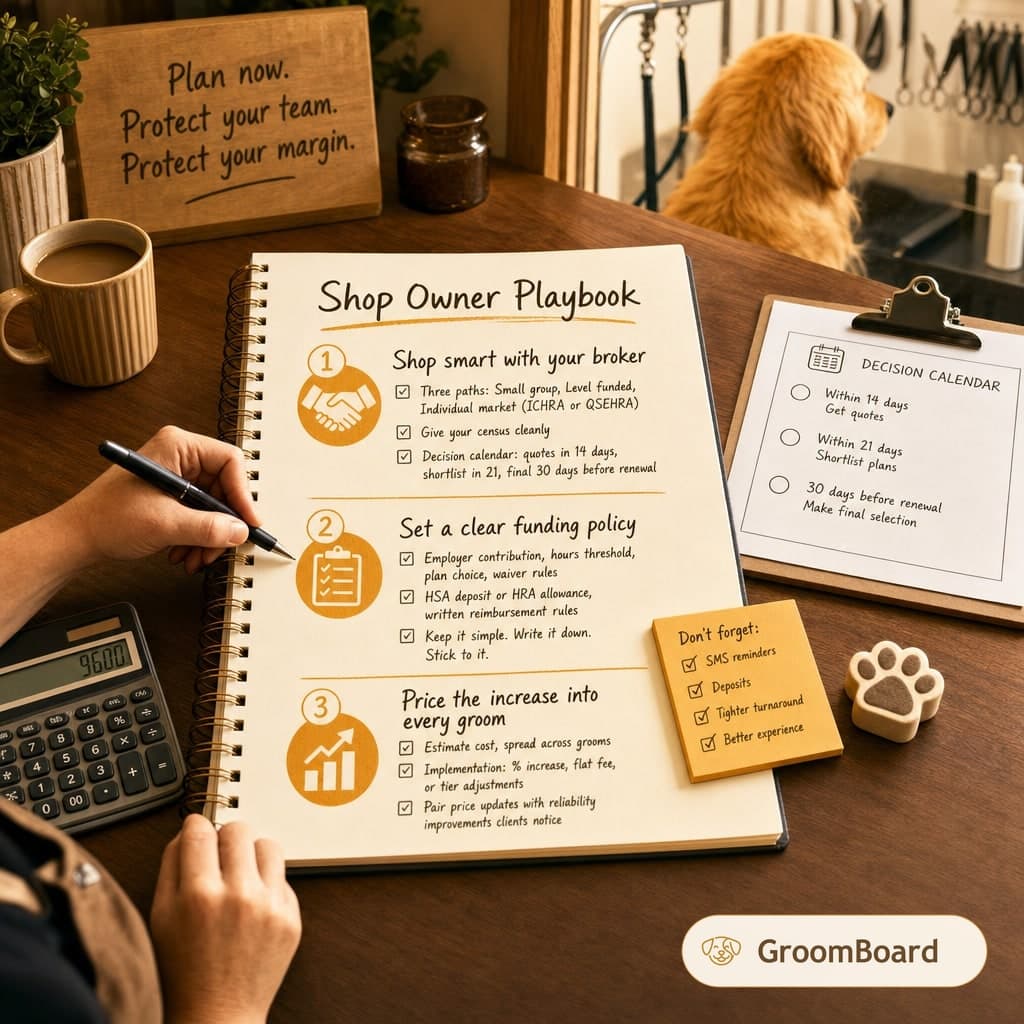
Shop smart with your broker this month
Tell your broker you want a side by side within two weeks. Ask for three paths:
- Small group plans: request at least one HMO or EPO with a narrow network, one broad network PPO, and one high deductible HSA option. Add dental and vision as voluntary if you want a no employer cost perk.
- Level funded plans: worth a look if available in your state and group size, but confirm regulatory fit and minimum participation rules. Ask for worst case maximum cost, not just the teaser rate.
- Individual market with employer reimbursements: price an ICHRA that lets employees pick their own individual plan, or a QSEHRA if you are a small employer without a group plan. Have the broker show after tax math for different income levels.
Give your census cleanly: date of birth, home ZIP codes, coverage tier for each person, and whether each employee is full time. Set a decision calendar now: quotes in 14 days, shortlist in 21, final selection 30 days before renewal.
Set a clear funding policy and stick to it
Your benefit is only sustainable if the math is predictable. Use written rules you can explain in two sentences:
- Employer contribution: for example, 60 to 75 percent of employee only premium, 0 percent for spouses and dependents. If you have tight margins, set 50 percent and revisit mid year.
- Hours threshold and waiting period: eligible at 30 hours per week on average, benefits start the first of the month after 60 days. This protects you from churn.
- Plan choice: pick one base plan for the shop, allow buy up at the employee’s expense. If you go HSA, consider a fixed employer HSA deposit such as 50 to 75 dollars per month.
- Waiver rules: require proof of other coverage for anyone declining, keep it in the personnel file.
If you choose an HRA route, set the allowance per month and define reimbursement categories in writing. For QSEHRA, stay within the current IRS annual limit and reimburse only premiums and qualified expenses. For ICHRA, match classes to your structure, for example full time, part time, or seasonal. Your accountant can confirm the tax treatment for your situation.
Price the increase into every groom
Do not absorb benefits cost, spread it across your book. Here is a simple way to do it:
- Estimate your annual employer cost. Example: two employees on the plan at 400 dollars per month employer share equals 9,600 dollars per year.
- Divide by expected annual grooms. Example: 2,000 grooms per year yields 4.80 dollars per groom.
- Decide how much to pass through. If you cover half from efficiency gains, add 2.50 to each groom, round to 3 dollars so it is clean on the price list.
Implementation options:
- Across the board increase of 2 to 4 percent on base groom prices on January 1.
- Flat per dog fee added to every invoice, for example a 2 or 3 dollar clinic and benefits fee, stated on the menu.
- Breed and weight adjustments. If you already use weight based tiers, move each tier up 1 to 3 dollars. Clients accept clear tiering better than surprise add ons.
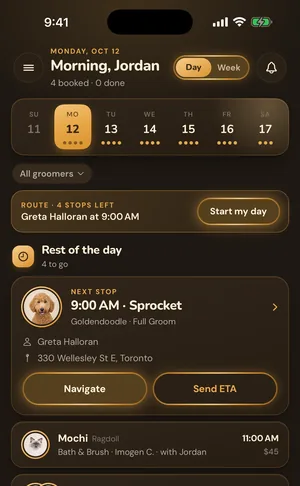
Pair price updates with reliability improvements clients notice: stricter SMS reminders, deposits for new clients, and tighter turnaround windows. Tools that support online booking, reminders, and deposits help reduce no-shows, which offsets rising overhead. GroomBoard, for example, supports online booking, SMS reminders, and Stripe deposits if you want to formalize these changes.
Control demand and staffing cost without cutting corners
Higher fixed costs require tighter staffing and scheduling. Practical moves:
- Minimum productivity target: book 5.5 to 6.5 full grooms per full time groomer per day, depending on coat mix. Track weekly, adjust support hours if targets slip.
- Charge for true work. A severe mat surcharge at 1 to 1.5 dollars per minute past the quoted slot, double coat deshed add on at 15 to 30 dollars, and a senior handling fee when two people are required. This is not about nickel and diming, it is about paying for labor.
- Deposit policy: new clients at 25 to 50 percent deposit at booking, same day cancellations forfeit the deposit. Repeat offenders move to day of service prepay.
- Trim low ROI services. If nail walk-ins disrupt flow, convert to scheduled 15 minute blocks, minimum 15 dollars ticket.
Communicate early and lock timelines
Whatever you pick, tell the team before you tell clients. A simple script works: when renewals come in, we review options, the shop covers a set share, and any change to employee deductions will be confirmed at least three weeks before the effective date. Give written summaries, not plan brochures alone.
With clients, keep it short and neutral. Prices are updating on January 1 to reflect higher operating costs, including insurance and supplies. Your pet’s safety and groom quality remain the priority. Update your website menu, online booking, and in-salon signage the same week you send the notice.
Rates may be increasing next year according to the report referenced above. If you operate in New York, expect your renewal to reflect it. The owners who shop alternatives now, reset contribution rules, and price with intention will keep coverage in place without sacrificing profit.