
What Vaccines Do Dogs Need for Grooming? (And What Your Salon Should Require)
If you are booking a groom, the short answer is rabies, with paper proof. If you run the salon, the longer answer is that everything past rabies is a policy you choose, and it is worth choosing on purpose. This guide covers both sides: what the big chains require, what independent groomers usually ask for, what counts as proof, and how to set and enforce a vaccine policy without turning away good clients.
The Short Answer: What Most Groomers Require
Rabies sits on its own line for a reason. It is the vaccine required by law for dogs in most states, and it is the one that matters if a dog bites someone at the salon. Bordetella, DHPP and influenza are the salon protecting its other clients and its own reputation.
What PetSmart and Petco Require
The two big chains publish their rules, and they make a useful baseline because so many owners have heard them.
- PetSmart: its vaccination policy lists only rabies for dogs in the salon, required for dogs older than 16 weeks, with written proof. Puppies between 8 and 16 weeks may receive salon services without vaccinations. Vaccines must be given at least one hour before arrival. PetSmart does not accept titer tests, does not accept a rabies tag in place of vet records, does not require rabies in Hawaii, and says regional exceptions may apply.
- Petco: its salon pages ask for rabies for dogs 16 weeks and older, given at least 24 hours before the appointment, and at least two rounds of puppy starter vaccines (distemper, hepatitis and parvovirus) for puppies under 16 weeks. Acceptable proof is a record from a vet, rescue or breeder, or a typed letter on clinic letterhead signed by the vet. A rabies tag is not accepted, and neither is a rabies shot given at home. Petco notes that New York City requires additional vaccines for groomed dogs and that its Hawaii stores do not require vaccinations.
So if a client says "PetSmart only asks for rabies," they are right. That does not mean your salon has to stop there.
What Counts as Proof
Groomers are not vets, and nobody expects you to verify a vaccine yourself. What you can do is ask for a document that a vet produced. Good proof shows the dog's name, the vaccine, the date given, the expiry date, and the clinic. That means:
- The vaccination certificate or record from the vet clinic
- A letter on clinic letterhead, signed by the vet
- A shelter, rescue or breeder record for a young dog
- A clear photo or PDF of any of the above
Not proof: a rabies tag (tags get swapped between dogs and do not show an expiry), an owner's word, or a shot given at home. If an owner has no record on hand, calling the clinic while they wait usually solves it; most clinics will email a copy within minutes.
Puppies: When Can They Come In?
Puppies are where the rules bend. Rabies is typically given around 12 to 16 weeks, so a strict "rabies or no groom" policy would keep every puppy out of the salon during the weeks when an early, gentle first visit matters most. That is why PetSmart allows puppies between 8 and 16 weeks without vaccinations, and Petco asks for two rounds of puppy shots instead of rabies.
For an independent groomer, a common middle ground is to accept puppies under 16 weeks with proof of their first rounds of puppy vaccines, book them at quiet times, keep them off shared floors, and ask for the rabies record at the first visit after it is due. Our guide to a puppy's first grooming visit covers how to make that first appointment go well.
Setting Your Own Salon's Vaccine Policy
Groomers on r/doggrooming and in grooming Facebook groups ask each other this constantly, and the honest answer is that it depends on how your shop works.
- Require rabies, always. It is the legal floor in most places, and if a dog bites you or a bather, a current rabies record turns a frightening situation into a manageable one. See our guide on what happens when a dog bites a groomer.
- Add bordetella if dogs share air. A cage dryer room, a waiting area, or a busy day with dogs crated between steps is exactly where kennel cough spreads. A mobile groomer working one dog at a time in a van has less reason to require it.
- Decide on DHPP based on who you groom. If you take a lot of puppies and young rescues, asking for DHPP protects them. If your book is mostly adult regulars, rabies plus bordetella is common.
- Decide in advance what you will do about titers and medical exemptions. PetSmart refuses titers outright. Some independent groomers accept a titer result or a vet's exemption letter for an elderly or medically fragile dog. Either is a fair policy as long as you apply it the same way to everyone.
- Check local law. Some cities and states add requirements for grooming facilities. New York City is the example Petco names. Your local health department or licensing office is the authority, not a forum thread.
Then write it down where clients see it before they book: on your booking page, in your intake form, and in your confirmation text. A policy that only exists in your head gets argued at the front desk.
How to Collect and Track Vaccine Records Without the Paperwork
The hard part of a vaccine policy is not deciding it, it is chasing expiry dates for hundreds of dogs. A rabies certificate that was current in March can lapse by September, and nobody notices until the dog is on the table.
A system that works:
- Collect records before the first visit, not at check in, so a missing record never costs you a slot.
- Store the expiry date, not just the file. A photo of a certificate does not remind anyone of anything.
- Get warned when you book a dog whose vaccine has expired, so you can ask for the new record days ahead instead of at the door.
- Remind owners before a vaccine runs out, because they are far more likely to update a record when you ask early.
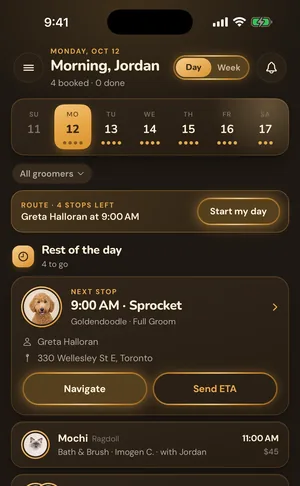
GroomBoard does this inside the client file. Each pet has a vet records section with vaccine dates, expiry dates and attached certificates (photos or PDFs, stored privately). You can turn on a setting so your online booking page asks clients for the rabies date and a copy of the certificate when they book, with bordetella and DHPP as optional fields. When you book a dog whose vaccine has expired, the booking form flags it, and you can switch on a text that reminds the owner about two weeks before a vaccine runs out. That keeps the policy enforced without anyone standing at the counter asking for papers. Start your free 7 day trial →