
How to Start a Mobile Dog Grooming Business: The Complete 2026 Guide
Mobile dog grooming is one of the fastest growing corners of the pet industry, and for good reason. You skip salon rent, charge a convenience premium, and build deeply loyal clients who will never go back to dropping their dog at a shop. The catch is the vehicle: a grooming van is a serious capital investment, and the difference between a profitable route and an expensive mistake comes down to planning. This guide walks through the real numbers, the legal requirements, and how to fill your calendar, with the key claims sourced.
Demand is on your side. The U.S. Bureau of Labor Statistics projects employment of animal care and service workers to grow 11% from 2024 to 2034, much faster than the average occupation, with roughly 81,700 openings a year. Pet ownership keeps climbing, and convenience services like mobile grooming are capturing a growing share of that spend.
Step 1: Understand the Real Startup Costs
The single honest thing this guide can tell you: the van is almost everything. Estimates for a full mobile setup range widely depending on whether you buy used and self convert or buy a new, professionally built unit. A realistic 2026 picture:
The strategic question is new vs. used. A new professionally converted van, built by specialists like Wag'n Tails, Hanvey, or Gryphon, gets you on the road fast with reliable plumbing and electrical, but ties up six figures. A used van or self conversion slashes the entry cost but demands more sweat equity and carries more breakdown risk. Many successful operators start used, prove the route, then upgrade. For a broader cost breakdown across grooming business models, see industry resources like this mobile startup cost guide.
Step 2: Handle Licensing, Permits, and Zoning
Here's the good news and the catch. No U.S. state requires a personal license to groom dogs. But "I don't need a license to groom" is not the same as "I don't need anything to operate a business." Nearly every locality requires:
- A general business license from your city or county, plus an EIN and tax registration.
- An animal handling or grooming establishment permit in some jurisdictions. New York City, for example, requires a dedicated Small Animal Grooming Establishment permit, your city may have its own version.
- Health department and water disposal rules that hit mobile operators specifically. Graywater from bathing cannot legally be dumped into storm drains in most places, you'll need a proper holding and disposal plan.
- Parking and zoning compliance for where you operate and where you store the van.
Call your city's business licensing office before you spend a dollar on a van. Mobile specific rules vary far more than salon rules, and retrofitting compliance is expensive. Pair this with proper coverage, our grooming business insurance guide covers what mobile operators specifically need.
Step 3: Equip the Van
A functional grooming van is a self contained salon. The essentials:
- Water system: fresh water and graywater tanks, a water heater, and a pump.
- Power: a generator or a robust battery/inverter system to run dryers and clippers.
- Grooming station: a secure table, a bathing tub, and a high velocity dryer.
- Climate control: heating and cooling so both you and the dogs are comfortable year round.
- Safety: nonslip surfaces, secure restraints, ventilation, and a first aid kit.
Step 4: Price the Convenience Premium
This is where mobile groomers leave money on the table. You are not just grooming a dog, you're delivering one on one, door to door service with zero stress for the client and the pet. Price it accordingly. Most mobile groomers charge 10 to 20% above local salon rates, and many add a minimum ticket or a small travel fee outside their core radius. Don't apologize for it; clients who book mobile are explicitly choosing convenience over price. Use our Pricing Calculator for a salon baseline, then add your premium on top. For the full menu structure with mobile premiums included, see our grooming price list template.
Step 5: Build and Fill Your Route
Profitability in mobile grooming lives and dies by drive time. Every minute between appointments is unpaid. The operators who win:
- Cluster geographically. Group each day's appointments by neighborhood so you're not crisscrossing the city. This is the single biggest lever on daily income.
- Own local search. Most clients find mobile groomers by Googling. A strong Google Business Profile is nonnegotiable.
- Turn the van into a billboard. A clean, well branded wrap markets you in every driveway you park in.
- Ask for reviews and referrals from day one. Mobile clients are loyal and talkative, happy ones fill your route for free.
- Partner locally with vets, shelters, and pet stores for referrals.
Step 6: Run It Like a Business From Day One
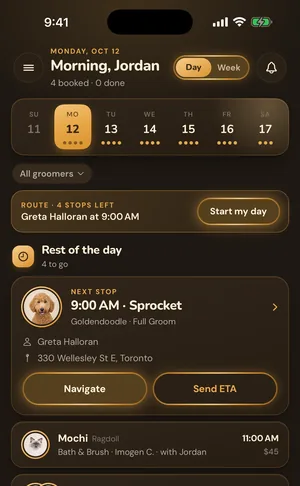
Solo mobile groomers are easily overwhelmed by the admin: booking, route planning, reminders, and payments while doing all the grooming themselves. This is exactly where software pays for itself. GroomBoard gives you online booking, automated SMS confirmations and reminders (which cut the no shows that wreck a tightly scheduled route), client and pet records, and payments, all from your phone in the van. See our notes on software for independent and home based groomers, much of which applies directly to mobile.
What does mobile grooming software cost?
For one van, between $19 and $99 a month, and the difference is mostly how texting is billed. Prices as checked on each vendor's own page on 16 October 2026:
The Bottom Line
Mobile grooming rewards groomers who plan. Budget honestly for the van, get your local permits squared away before you buy, price the convenience you're providing, and obsess over route density. Do those four things and a solo van can comfortably out earn a salon chair, with no rent and clients who'll never leave.
Ready to run your route without the chaos? Start your free 7 day trial →
This article is general business guidance, not legal or tax advice. Licensing, zoning, and water disposal rules vary by locality, confirm requirements with your local authorities and a qualified professional before launching.
Still building your skills? How to become a dog groomer covers the training routes and how long each really takes before you are commercially fast.