
How to Hire Dog Groomers: A Salon Owner's Guide (2026)
Hiring your first groomer is the moment a solo operation becomes a real business, and it's where a lot of owners get burned. Not by the grooming, but by the paperwork: misclassifying staff, structuring pay badly, or hiring a skilled scissor hand who turns out to be a no show or rough with dogs. This guide covers the legal foundation, how to pay, where to find people, and how to keep them, with the legal claims sourced to primary documents so you walk into your accountant's office knowing the right questions.
First, the Decision That Catches Owners Every Year: Classification
Before you talk pay or job ads, get this right. Every grooming hire is either an employee (W-2) or an independent contractor (1099), and you don't get to simply pick the one with less paperwork. The IRS decides based on the facts of the working relationship, using three categories of control:
- Behavioral control: Do you control what the worker does and how they do it, their schedule, their methods, the order of the work?
- Financial control: Do you control the business side, how they're paid, whether you reimburse expenses, and who provides the tools, products, and equipment?
- Type of relationship: Is there a written contract or benefits? Is the relationship ongoing, and is the work a key part of your business?
Apply that to a typical salon groomer: you set their hours, you set the prices, you provide the tub and dryers and shampoo, and grooming is your business. That person is an employee, full stop, no matter that you pay them commission or hand them a 1099. A persistent industry myth says "paid on commission means contractor." It's false; plenty of employees are paid on commission. If you are weighing a chair renter instead of an employee, we ran the break even math from both sides in booth rent vs commission for dog groomers.
Why this matters so much: misclassifying an employee as a contractor is one of the most expensive mistakes in the trade. If a worker is reclassified after the fact, you can owe back payroll taxes, the employer's share of FICA, unpaid overtime, and penalties and interest. If you genuinely can't tell, either you or the worker can file IRS Form SS-8 to request an official determination (though it can take six months). A true independent contractor, think a booth renter who sets their own prices and hours, keeps their own clients, and supplies their own tools, is legitimate. A directed, scheduled commission groomer is not. When in doubt, hire as a W-2 employee and talk to an accountant.
How to Structure Pay
Once classified correctly, decide how to pay. The three common models:
Before you offer a number, run it. The free grooming commission calculator shows what a given split pays the groomer per week, per month and per year, and what the salon keeps from the same groom to cover rent, supplies and overhead.
Whatever you choose, remember that W-2 employees are protected by the federal Fair Labor Standards Act: they must earn at least minimum wage for all hours worked and overtime past 40 hours in a week. A commission groomer whose slow week drops their effective rate below minimum wage must be topped up to it. For benchmark numbers, the BLS reports a median wage for animal caretakers of $33,470 per year as of May 2024, though experienced and high volume groomers earn well above that, see our groomer salary guide for the full range.
Where to Find Groomers
Good groomers are in demand, so you'll usually have to go find them rather than wait for applicants:
- Grooming schools: Build a relationship with local schools to get first look at graduating students.
- Industry job boards and Facebook groups: Where working groomers actually look.
- Trade shows and competitions: Great for meeting skilled, motivated groomers in person.
- Referrals from your team: Your best groomers know other good groomers.
- Grow your own: Hire a bather or assistant and apprentice them up. It's slower, but you end up with a groomer trained to your exact standards and culture. (See our guide on how groomers train and certify.)
Before you post, copy one of our groomer, bather and trainee job description templates, which include pay wording for states that require a range.
How to Interview: Always Do a Working Interview
A résumé and a chat tell you almost nothing about how someone handles a frightened 80 pound dog. The single most important step in hiring a groomer is a hands on working interview, pay them for a trial shift or a single dog and watch:
- Safe handling. How do they read and manage an anxious or wiggly dog? This is nonnegotiable and hard to teach.
- Finish quality and efficiency. Is the groom clean, and done in a reasonable time?
- Care and temperament. Are they calm, gentle, and genuinely good with the animal?
- Professionalism. Cleanliness, communication, station setup.
Hire for attitude, reliability, and safety as much as raw skill. You can teach a clip pattern; you can't easily teach showing up on time and being kind to a scared dog. Verify certifications and check references.
How to Keep Good Groomers
The grooming industry runs hot on turnover, and replacing a skilled groomer costs far more than retaining one. Groomers leave for three reasons above all, pay, burnout, and culture, so manage all three:
- Pay fairly and transparently. Know your local market and don't make people guess how their pay is calculated.
- Protect against burnout. Set a realistic daily dog count. Pushing groomers to 10+ dogs a day to maximize commission is how you lose them, and their bodies.
- Invest in equipment and the space. Sharp tools, good dryers, and a safe, clean shop signal respect.
- Offer growth. Continuing education and certification support keep ambitious groomers engaged.
- Build a culture people don't want to leave. Respect, fair scheduling, and backing your staff in client disputes go a long way. Our guide on handling difficult clients is partly a staff retention tool, defending your team builds loyalty.
Manage a Multi Groomer Salon the Easy Way
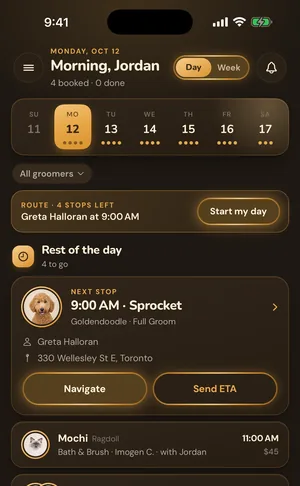
Once you have staff, you need to assign appointments to specific groomers, track each person's bookings and productivity, and keep client records the whole team can see. That's what multi groomer salon software is for, see our breakdown of the best grooming software for salons with multiple groomers. GroomBoard's Salon plan supports up to 5 groomers with per groomer calendars, shared client and pet records, and automated reminders. Start your free 7 day trial →
This article is general business guidance, not legal or tax advice. Worker classification and wage law are fact specific and vary by state, consult a qualified accountant or employment attorney before hiring.
Setting pay bands? Benchmark against the 2026 dog groomer salary guide. Candidates coming straight out of training will have followed one of the routes in how to become a dog groomer.