
Cavalier King Charles Spaniel Haircuts: Styles, Trims & the Natural Coat Tradition
The Cavalier King Charles Spaniel is a rarity in the grooming world: a breed whose official standard doesn't just permit a natural coat, it requires one. No trimming, no sculpting; the silky, feathered coat is meant to be presented as it grows. That tradition is worth knowing before you search for haircut ideas, because it explains something practical: a Cavalier never actually needs a haircut. But tradition doesn't walk through mud, drag its ears through the water bowl, or brush itself, so this guide covers the honest menu, from the natural look properly maintained to the tidy trims and clips real pet owners choose, with the tradeoffs stated plainly. For the breed's full care routine, see our Cavalier King Charles Spaniel grooming guide.
Cavalier Coat Options at a Glance
1. The Natural Look: the Breed Standard, Maintained
Left alone, a healthy adult Cavalier wears a moderately long, silky coat with feathering on the ears, chest, legs, feet, and tail, and unlike a Poodle or Shih Tzu, it stops growing at its genetic length. That's the quiet secret of this breed: the "style" is simply the coat, kept clean and brushed. No scissors required, ever, in principle.
In practice, the natural look is a maintenance commitment rather than a cutting commitment: line brushing three times a week with a slicker and metal comb, particular attention to the friction zones (behind the ears, armpits, britches, under any harness), a bath and thorough blow dry every 4 to 6 weeks, and drying after wet walks. Do that, and you own the version of the breed the standard describes, flowing, glossy, and untrimmed. Skip it, and the silky coat quietly felts in the hidden zones until the natural look is no longer on the menu.
2. The Tidy Trim: What Most Pet Cavaliers Actually Get
The tidy trim is the sweet spot between tradition and Tuesday morning: the coat stays natural, and the groomer neatens only the practical zones.
- Feet: hair between the paw pads clipped flush and the foot outline scissored round, Cavalier "slippers" collect mud, ice, and grit.
- Sanitary: a short, hidden trim under the tail and belly for hygiene.
- Ear edges: the fringe tipped level so it clears food and water bowls, with stray wisps around the canal opening cleaned up.
From across the room, a tidy trimmed Cavalier is indistinguishable from a natural one, which is exactly the point. This is the service most groomers recommend as the default, because it solves nearly every complaint owners bring to the salon without spending the coat's texture to do it.
3. The Puppy Cut: Honest Pros and Cons
Yes, you can clip a Cavalier. The breed carries a silky single type coat, not the double coat that makes clipping a Pomeranian or Corgi genuinely risky, so a puppy cut (an even ½ to 1 inch all over, feathering included) is a legitimate option, and for some households the right one. Less brushing, less mud, less drying time, fewer mats.
Here is the part a good groomer tells you before the first clip: Cavalier coat frequently changes when it regrows. The new coat often comes in softer, fuzzier, and duller than the silky original: a cottony texture that mats more easily at length and never quite recovers the glassy show coat finish. It isn't harmful, and plenty of owners keep the clip forever precisely because regrowing is awkward. Treat it as a one way door you're allowed to walk through: choose the puppy cut for the lifestyle, not as a temporary experiment. If you're comparing with the doodle version of this breed, our Cavapoo haircuts guide covers a coat that's actually built for clipping, and our puppy cut guide explains how to specify the length.
4. The Summer Trim
Between "natural" and "clipped" sits the seasonal compromise: the body coat left intact, the feathering shortened on legs, britches, and tail, the belly hair taken down so the dog can cool against tile, and the ear fringe tipped shorter for swim season. The Cavalier silhouette survives; the mud and burr collection system doesn't.
What a summer trim should not be is a shave. Clipping to the skin removes sun protection, invites patchy, textured regrowth, and doesn't meaningfully cool a dog that regulates temperature by panting. If summer heat is the concern, the highest value service is actually a bath and high velocity blow out to strip dead undercoat, many Cavaliers carry a surprising amount, with the trim as garnish.
5. Feathering Management: Keeping the Look, Losing the Drag
The feathering is the breed's glory and its main workload. Managed well, it never needs to be sacrificed:
- Ears: brushed to the tips weekly; fringe length is personal taste, but keep it level and clear of the bowls.
- Legs and britches: tips scissored even every groom so they stop catching leaves and litter; line brush to the skin, not over the surface.
- Tail plume: tipped level with the hock when it starts to drag.
- Chest frill: combed through fully, it hides tangles against the front legs.
The technique that saves feathering is brushing in layers down to the skin. Surface brushing polishes the top while felt forms silently beneath it: the single most common way natural coated Cavaliers end up needing a clip nobody wanted.
6. Ear Care: the Nonnegotiable Section
Whatever style you choose, the ears choose their own schedule. A Cavalier's ears are long, heavily feathered, and lie flat against the head: a warm, damp, low airflow pocket that tangles on the outside and traps moisture on the inside. Weekly, at minimum: brush the feathering from leather to tip, comb behind the ear where mats form against the skull, check the canal for redness or odor, and dry the ears properly after baths and swimming.
At the salon, ask for the hair around the canal opening to be kept tidy, and on infection prone dogs, for the underside of the ear to be thinned, airflow improves while the visible fringe stays full. It's the same principle groomers apply to the Cavalier's heavier eared cousin; our Cocker Spaniel haircuts guide covers the full ear management playbook, most of which transfers directly.
7. The Senior and Matted Coat Reality
Two situations rewrite the style conversation. Senior Cavaliers, a breed that often carries heart conditions into old age, may not tolerate long grooming sessions or heavy dryers. The kind choice is a shorter, lower maintenance trim done in less table time, even on a dog that wore a natural coat for a decade. Comfort outranks tradition, every time.
And matted coats follow the universal rule: if the feathering or body coat has felted to the skin, hours of dematting on a soft tempered, thin skinned breed is not kindness, clipping beneath the mats and starting over is. Cavalier coat regrows to a respectable length within months (texture caveats from section 3 noted). A groomer who recommends the reset is choosing the dog over the photo, and the right response is a shorter style plus a standing brushing routine while it grows.
Which Cavalier Style Should You Choose?
- You love the breed as the ring presents it and will brush for it: natural look, 4 to 6 week baths, layers to the skin brushing.
- You want the natural look with less friction: tidy trim, the default answer for most pet Cavaliers.
- Mud, mats, and time are winning: puppy cut, chosen once and kept, with eyes open about the texture change.
- Hot climate or a swimmer: summer trim plus rigorous ear drying.
- An older dog or a felted coat: comfort trim now, comfort schedule after.
To see how the Cavalier's options sit alongside clip first breeds and other coat types, our full dog grooming styles guide maps every major style to the coats that can wear it.
For Groomers: the Texture Conversation, on the Record
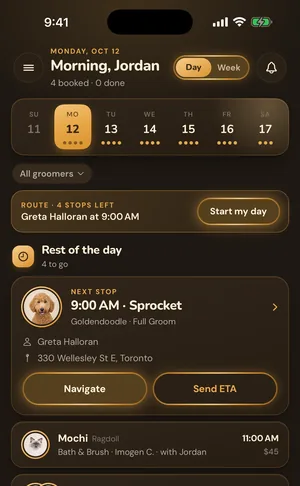
The Cavalier appointment that goes wrong is almost never the grooming, it's the expectations. The owner who didn't know the puppy cut changes the coat, the ear infection history nobody wrote down, the senior heart condition mentioned once at drop off two groomers ago. GroomBoard keeps all of it on the pet profile: style decisions and the conversations behind them, health flags, drying tolerances, and the exact trim spec from last visit, visible to whoever has the dog on the table. Automated SMS reminders keep natural coat clients on the 4 to 6 week cycle that makes the natural coat possible. See how it works as software built for professional groomers. Start your free 7 day trial →