
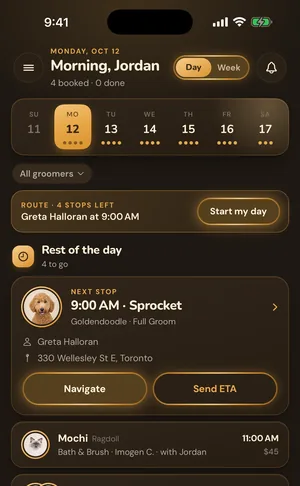
GroomBoard on your phone.
Your day, your route and checkout in your pocket. Sign in with the account you already have.
- iPhoneApp StoreIn review
- AndroidGoogle PlayComing next
GroomBoard on your phone.
Your day, your route and checkout in your pocket. Sign in with the account you already have.
- iPhoneApp StoreIn review
- AndroidGoogle PlayComing next
Dog Teeth Brushing
Professional tooth brushing with pet safe paste, often bundled with a bath.
Store trim settings, client preferences, and photo histories per pet so every trim matches the last, and clients stay loyal.
Dental disease affects over 80% of dogs by age three. Daily brushing prevents plaque and tartar, but most owners do not brush at all. A professional brushing at every groom catches tartar early and signals problems, red gums, broken teeth, foul odor, that warrant a vet visit. Groomers use pet safe enzymatic toothpaste (never human toothpaste, which contains xylitol that is toxic to dogs) and a soft brush or finger cot. It is a 5 minute add on that most clients happily pay $10 to $15 for, especially when presented at booking. Groomers cannot do a full dental scaling (that is a vet procedure under anesthesia), but regular brushing extends the interval between vet dentals by years.
What working groomers run into
Real challenges with dog teeth brushing
Tool sharpness and maintenance
Dull blades tug coat and stress dogs. A simple service count log tells you when it is time to ship shears out for sharpening.
Client expectations vs coat reality
Owners ask for "a puppy cut" and mean five different things. Store photo references and clipper guard settings per pet so every visit matches the last.
Pricing by coat condition
A clean dog takes half the time of a matted dog at the same size. A tiered pricing structure by coat condition protects your hourly rate.
Why groomers run this service on GroomBoard
Built for real world dog teeth brushing workflows
Simple $10 to $15 add on that clients happily approve at booking
Early detection of dental issues, red gums, broken teeth, odor
Extends the interval between expensive vet dental cleanings
Pet safe enzymatic paste tracked per pet in the product notes
Recurring reminder nudges clients toward monthly brushing
Step by step
How dog teeth brushing works
Introduce the paste
Let the dog lick the enzymatic paste off your finger first. Most dogs like the flavor. This lowers resistance on the brush.
Lift the lip, start gently
Work on the outer surfaces first. That is where tartar accumulates. Do not fight for the inside surfaces, the tongue handles those.
Brush in small circles
Focus on the gum line where plaque builds. Thirty seconds per quadrant is plenty.
Check for issues
Red gums, loose teeth, broken teeth, and foul odor are signs for a vet visit. Note findings in the pet profile so the owner gets the message.
Wipe down and treat
Finish with a dental wipe for fresh breath. Give the dog a small treat, positive association for next time.
Recommended tools for dog teeth brushing
The gear that makes dog teeth brushing faster and cleaner, each guide ranks the top professional picks for 2026.
Best Dog Toothpaste (2026)
Dental disease is the most common medical condition vets see in adult dogs, and daily brushing with a dog safe toothpaste is the single best thing an owner can do about it. Here are our top dog toothpaste picks for 2026: the enzymatic vet standard, a VOHC accepted formula, the best natural option, and the best budget tube.
Best Dog Toothbrushes (2026)
Most dogs over three years old already have periodontal disease, and the single thing that slows it down is a brush touching the gum line. Here are the best dog toothbrushes for 2026, matched to the dog you actually have: the patient one, the wiggly one, and the one who has never had a brush near their mouth.
Breeds that need dog teeth brushing most
Match the service to the coat. These breed guides go deep on the specific workflow for each.
Chihuahua
Every 8 weeks · 1/5 difficulty
Yorkshire Terrier
Every 4 weeks · 4/5 difficulty
Shih Tzu
Every 4 weeks · 4/5 difficulty
Toy Poodle
Every 5 weeks · 4/5 difficulty
Pug
Every 6 weeks · 2/5 difficulty
Dog Teeth Brushing across top cities
GroomBoard powers grooming businesses across the country. These city guides break down the local market.
Dog Teeth Brushing FAQ
Do I need to brush my dog's teeth?
Yes. Periodontal disease is the most common health issue in dogs and causes systemic issues including heart and kidney problems. Daily brushing is ideal, but even weekly prevents most issues. Professional brushing at every groom fills the gap when home brushing lapses.
Can groomers do a dental cleaning?
No. A full dental scaling and polishing requires anesthesia and must be done by a veterinarian. Groomers do surface level brushing, which prevents plaque from turning into tartar. Think of it like a home toothbrushing. It is prevention, not a cleaning.
What toothpaste do you use?
Pet safe enzymatic toothpaste, typically flavored (poultry, beef, or vanilla mint). Human toothpaste contains xylitol or fluoride which are toxic to dogs. Never use human toothpaste, baking soda, or salt.
How often should teeth be brushed?
Daily is ideal. Three times a week is the realistic minimum that meaningfully reduces plaque. A professional brushing at every groom is a great addition, not a replacement for home brushing.
Should I charge more for thicker coats?
Yes. Coat density and condition drive time, and time drives price. A tiered pricing structure (clean vs moderate vs matted) protects your hourly rate. Document the condition in the appointment notes so pricing decisions are defensible.
How often should I sharpen my shears?
Working groomers send shears out every 3 to 6 months depending on volume. A simple service counter in GroomBoard tells you when each pair has handled enough dogs to warrant a sharpening. Dull blades cause tugging, uneven cuts, and stressed dogs.
Run dog teeth brushing on GroomBoard
The features working groomers use to keep every service priced right, timed right, and rebooked on rhythm.
Service Level Scheduling
Set accurate durations per service so your calendar reflects real time, not guesses.
SMS Reminders
Automatic reminders keep clients on the right cadence for every service.
Online Booking
Clients self book the right service with pricing and add ons visible upfront.
Pet Profiles
Document product choices, temperament, and photos per pet and per service.
Ready to price and schedule dog teeth brushing accurately?
7 day free trial. No credit card. Every service configurable in minutes.